





What's Happening?
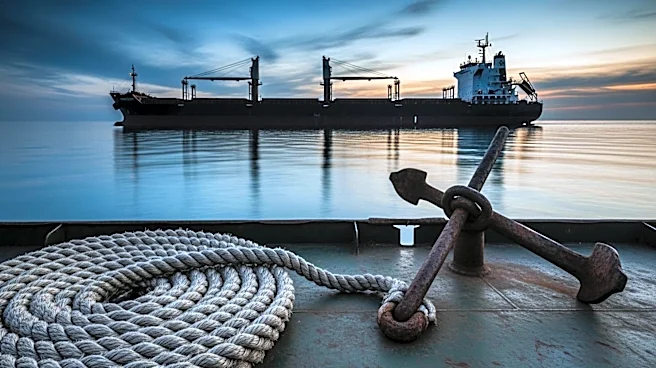
In a significant escalation of tensions near the Strait of Hormuz, a ship anchored off the United Arab Emirates was seized and taken toward Iran, while another cargo ship near Oman sank following an attack. The incidents occurred amidst ongoing diplomatic
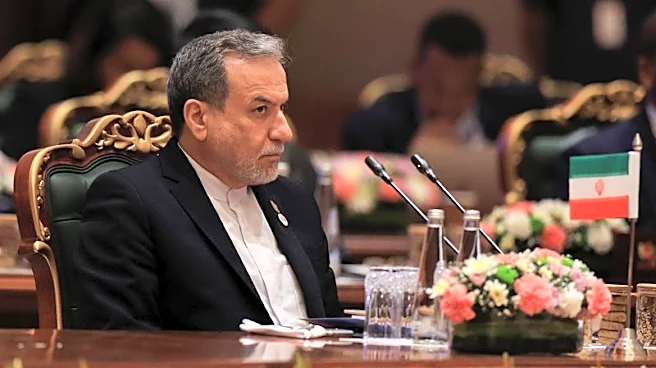
strains, with Iran asserting its control over the strategic waterway. The seized ship was reportedly taken by unauthorized personnel near the UAE port of Fujairah, a critical oil export terminal. Meanwhile, an Indian-flagged cargo ship, Haji Ali, sank off the coast of Oman after an attack ignited a fire on board. All 14 Indian crew members were rescued safely. The Indian government condemned the attack, though the perpetrators remain unidentified. These developments come as Iran demands reparations and recognition of its sovereignty over the Strait of Hormuz as conditions for further talks with the United States.
Why It's Important?
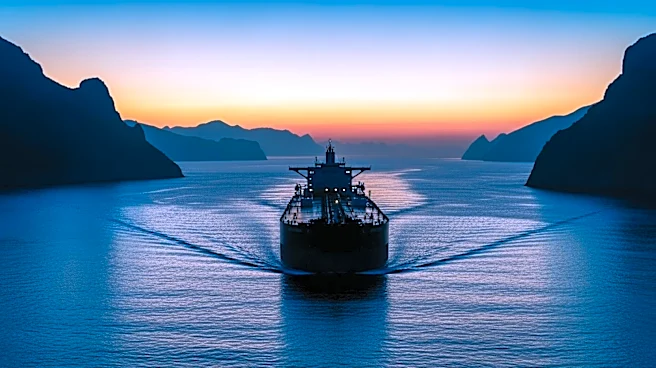
The Strait of Hormuz is a vital maritime chokepoint through which a significant portion of the world's oil supply is transported. The recent incidents highlight the ongoing geopolitical tensions in the region, which have the potential to disrupt global oil markets and impact energy prices worldwide. The seizure and sinking of ships underscore the fragile security situation and the risks to commercial shipping in the area. The U.S. and its allies are concerned about Iran's increasing control over the strait, which could lead to further instability and economic repercussions. The situation also affects diplomatic relations, as countries navigate the complex dynamics of Middle Eastern politics and security.
What's Next?
The international community is likely to monitor the situation closely, with potential diplomatic efforts to de-escalate tensions. The U.S. and its allies may consider increasing naval presence in the region to ensure the security of maritime routes. Iran's demands for reparations and sovereignty recognition could complicate diplomatic negotiations, potentially leading to prolonged instability. The situation may also prompt discussions on alternative routes for oil transportation to mitigate risks associated with the Strait of Hormuz.