








What's Happening?
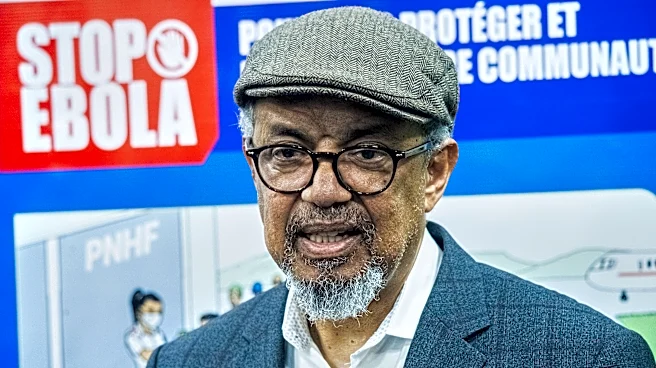
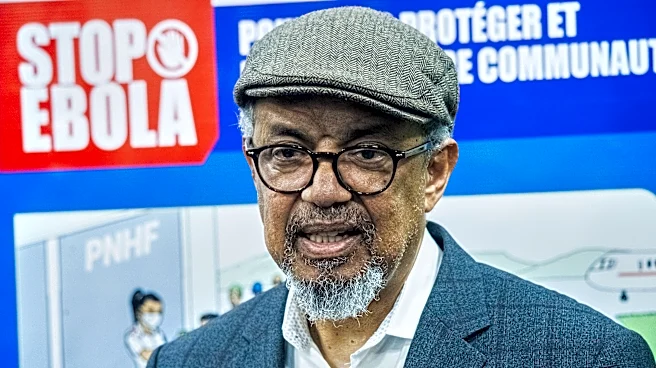
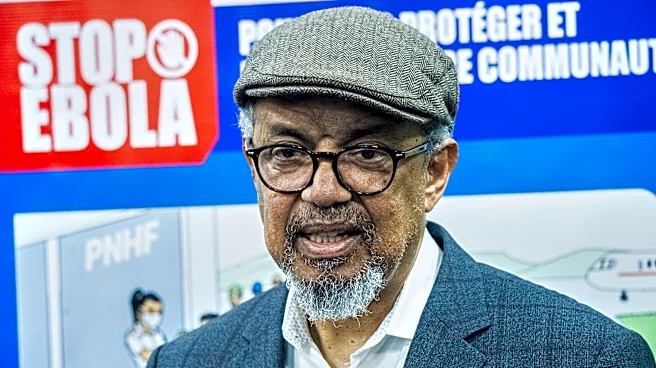
The World Health Organization's Director-General, Tedros Adhanom Ghebreyesus, visited Bunia in eastern Congo, the epicenter of a rapidly spreading Ebola outbreak. The Bundibugyo strain of Ebola, which currently has no approved treatment or vaccine, has resulted
in 906 suspected cases and 223 suspected deaths. The outbreak is spreading faster than the response efforts, despite organized health facilities and new aid arrivals. The WHO has upgraded its risk assessment to 'very high' at the national level. The U.S. has pledged $80 million in additional aid, bringing its total commitment to over $112 million. However, the response has been hindered by local conflicts and attacks on health centers.
Why It's Important?
The rapid spread of the Ebola outbreak in Congo poses a significant threat to global health security. The lack of an approved treatment or vaccine for the Bundibugyo strain complicates containment efforts. The outbreak's escalation could lead to increased international travel restrictions and economic impacts, particularly in affected regions. The U.S. and other countries are implementing health screenings at major airports to prevent the virus's spread. The situation underscores the need for robust international cooperation and support to manage and contain such outbreaks effectively.
What's Next?
The WHO and international partners are expected to continue scaling up their response efforts, including expanding testing and deploying more aid workers. The U.S. and other countries may enhance travel restrictions and health screenings. The situation requires ongoing monitoring and adaptation of strategies to address the outbreak's challenges. Local and international stakeholders must collaborate to ensure effective containment and support for affected communities.