



What's Happening?
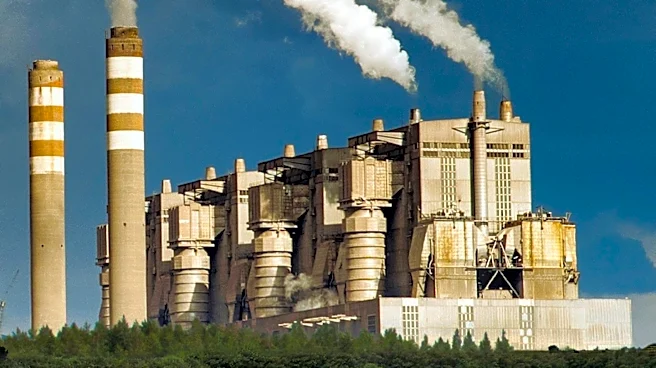
The U.S. Department of Energy has once again issued an emergency order compelling the 64-year-old J.H. Campbell Generating Plant near Grand Rapids, Michigan, to remain operational beyond its scheduled retirement date. This action directly defies a September
decision by a three-judge panel of the U.S. Court of Appeals for the District of Columbia Circuit, which had deemed the agency's previous extensions unlawful. Energy Secretary Chris Wright justified the latest extension by citing the plant's necessity to prevent blackouts and ensure reliable electricity access for customers. The Energy Department has stated its disagreement with the appellate court's ruling and has petitioned for a rehearing before the full court. This marks the seventh such emergency declaration for the Campbell plant since May 2025, as the Trump administration continues its efforts to bolster the U.S. coal industry. Environmental groups have strongly criticized the order, arguing there is no evidence the plant is needed for grid emergencies and that the extension costs Midwest families over $600,000 daily.
Why It's Important?
This ongoing dispute highlights a significant conflict between the Trump administration's energy policy goals and environmental regulations, as well as judicial oversight. The administration's repeated interventions to keep coal plants operational, despite court rulings and environmental concerns, underscore its commitment to supporting the fossil fuel industry. This approach has direct financial implications for ratepayers, who bear the costs of extending the life of older, less efficient plants. Environmental organizations argue that these actions undermine efforts to transition to cleaner energy sources and exacerbate climate change. The legal battle also raises questions about the separation of powers and the extent of executive authority in energy policy, with potential implications for future environmental regulations and the retirement of other fossil fuel infrastructure across the U.S.
What's Next?
The immediate next step involves the U.S. Court of Appeals for the District of Columbia Circuit deciding whether to grant the Energy Department's petition for a rehearing before the full court. Should the full court decline to hear the case or uphold the previous ruling, the dispute could potentially escalate to the Supreme Court. Meanwhile, environmental groups and several states, including Michigan, Illinois, and Minnesota, are expected to continue their legal challenges against these emergency orders. The Energy Department's continued defiance of court orders suggests a prolonged legal and political battle over the future of coal-fired power plants in the U.S. The outcome of these legal proceedings will set precedents for how future administrations can manage energy infrastructure and balance energy reliability with environmental protection and judicial mandates.
Beyond the Headlines
The repeated interventions to keep the J.H. Campbell plant open reflect a broader ideological struggle over the future of energy in the United States. Beyond the immediate legal and economic impacts, this situation touches upon the ethical considerations of prolonging the life of aging, polluting infrastructure in the face of climate change and public health concerns. It also highlights the tension between federal directives aimed at supporting specific industries and state-level efforts or market forces that might favor cleaner, more economical energy alternatives. The long-term implications could include increased investment uncertainty for renewable energy projects, prolonged reliance on fossil fuels, and a potential erosion of public trust in regulatory and judicial processes if court orders are consistently challenged or circumvented. This case could also influence how future administrations approach energy policy, particularly regarding the retirement of legacy power generation assets.