






What's Happening?
Brian Armstrong, co-founder and CEO of Coinbase, has publicly criticized traditional charitable foundations, asserting that they often cause more societal harm than good and frequently deviate from their original missions. This perspective was shared
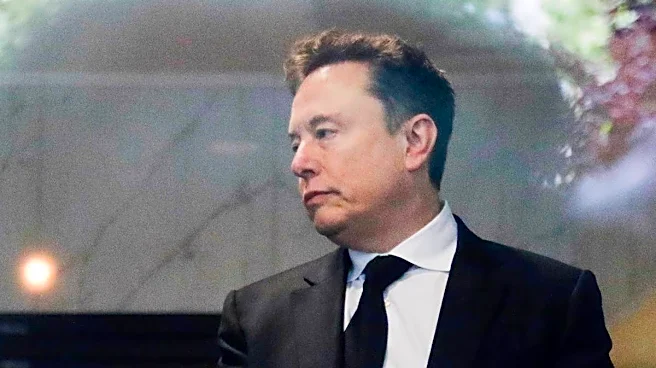
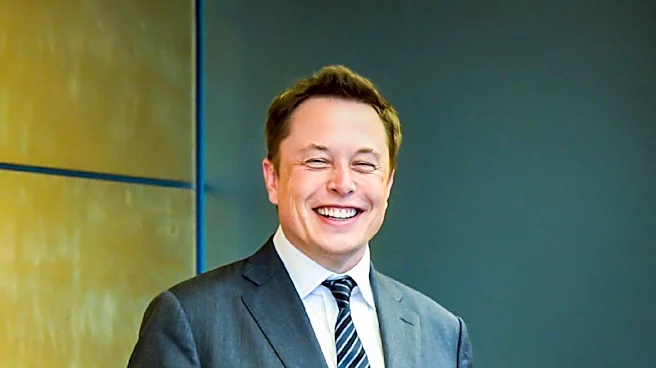
during a podcast, where Armstrong suggested that technology billionaires sometimes use large endowments for public relations rehabilitation, citing Microsoft co-founder Bill Gates as an example. Armstrong argued that charitable foundations can emerge in response to federal antitrust scrutiny and that once established, they often become 'captured by external ideologies,' exacerbating the very problems they intend to solve. He specifically mentioned criminal justice reform efforts, alleging they inadvertently led to increased crime rates. Armstrong stated his preference for donor-advised funds over formal foundations to support initiatives he believes advance human civilization, expressing concern over losing control of his capital. Tesla CEO Elon Musk publicly endorsed Armstrong's claims on X, stating, 'He's right,' which has ignited significant public debate regarding billionaire wealth distribution and charitable governance.
Why It's Important?
This debate is important as it challenges the conventional understanding and public perception of philanthropy, particularly from ultra-wealthy individuals. Armstrong's and Musk's critiques could influence how high-net-worth individuals approach charitable giving, potentially shifting away from traditional foundation models towards more direct or donor-advised fund approaches. This could impact the funding landscape for numerous non-profit organizations that rely on grants from established foundations for critical services, including local food banks, medical research, and emergency shelters. The controversy also highlights a growing ideological divide regarding the societal obligations of the ultra-wealthy and the effectiveness of large-scale charitable endeavors. If more billionaires adopt this viewpoint, it could lead to a re-evaluation of philanthropic strategies and potentially alter the flow of significant capital intended for social good, affecting various sectors across the U.S. that depend on such funding.
What's Next?
The public endorsement by Elon Musk is likely to amplify the discussion surrounding institutional philanthropy, potentially prompting other wealthy individuals to voice similar concerns or re-evaluate their own charitable strategies. This could lead to increased scrutiny of the operational effectiveness and ideological leanings of large charitable foundations. Non-profit organizations and philanthropic leaders may need to address these criticisms directly, potentially by increasing transparency regarding their governance and impact, or by advocating for the continued importance of traditional charitable structures. The debate could also spur policy discussions regarding the regulation and oversight of charitable foundations and donor-advised funds, especially concerning their long-term missions and accountability. Furthermore, this controversy might encourage a broader public discourse on wealth distribution, social responsibility, and the most effective ways to address societal challenges, potentially influencing public opinion and future philanthropic trends in the U.S.
Beyond the Headlines
Beyond the immediate debate, this controversy touches upon deeper ethical and cultural dimensions concerning the role of wealth in society and the mechanisms through which societal problems are addressed. Armstrong's argument about 'ideological capture' and the potential for well-intentioned initiatives to worsen problems raises fundamental questions about the efficacy and unintended consequences of large-scale social interventions. It also highlights a tension between individual donor intent and the evolving missions of long-standing institutions. The critique implicitly questions the power dynamics within philanthropy, where the visions of a few wealthy individuals can shape significant social agendas. This discussion could lead to a re-examination of the very definition of 'charity' and 'social good' in the 21st century, particularly in an era where technology billionaires wield immense influence. It may also foster a greater emphasis on impact measurement and accountability within the philanthropic sector, pushing for more data-driven approaches to ensure that charitable efforts genuinely achieve their intended positive outcomes.