

What's Happening?
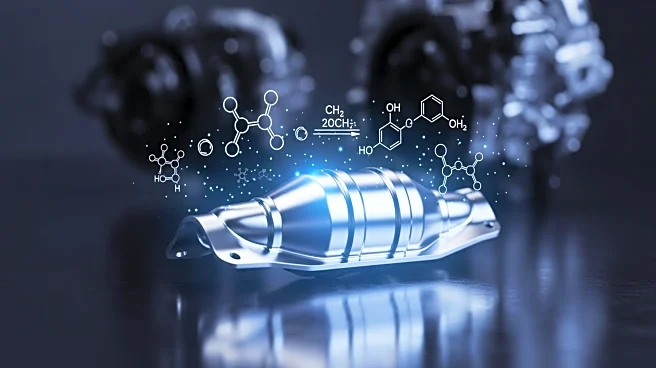
Recent research has focused on kinetic modeling to improve the removal of nitrous oxide (N2O) emissions from ammonia-fueled internal combustion engines. The study highlights the challenges of achieving ideal stoichiometric combustion, which ideally produces
only water and nitrogen. However, real-world combustion often results in significant levels of nitrogen oxides (NOx) and unburned ammonia. The research proposes using selective catalytic reduction and oxidation to address these emissions, with a focus on developing new catalysts that can operate effectively at lower temperatures. Iron-exchanged zeolites have been identified as promising catalysts due to their durability and cost-effectiveness.
Why It's Important?
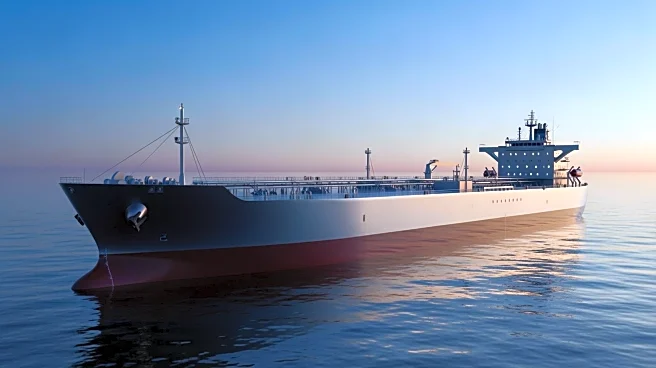
The development of effective N2O removal technologies is crucial for reducing greenhouse gas emissions from ammonia-fueled engines, which are considered a sustainable alternative to traditional fossil fuels. N2O is a potent greenhouse gas with a global warming potential significantly higher than CO2. By improving catalytic processes, the research supports the broader goal of decarbonizing the shipping and transportation sectors, which are major contributors to global emissions. This advancement could lead to more sustainable marine and industrial applications, aligning with global efforts to mitigate climate change.
What's Next?
Further research and development are needed to optimize the catalysts for commercial use, focusing on enhancing their performance at lower temperatures. The integration of these technologies into existing combustion systems will require collaboration between researchers, industry stakeholders, and policymakers. As the demand for sustainable fuels grows, the successful implementation of these catalytic solutions could accelerate the transition to cleaner energy sources in various sectors.