










What's Happening?
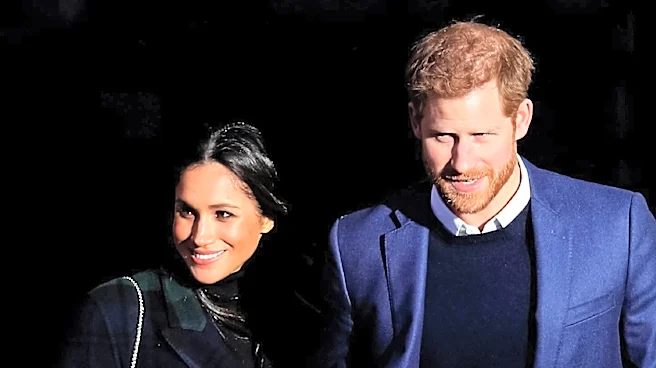
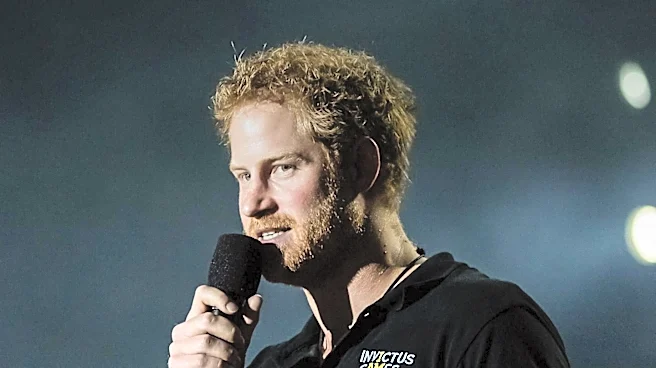
Prince Harry and Meghan Markle are reportedly losing a new battle for favorable coverage by artificial intelligence against King Charles III and the monarchy. According to a PR firm specializing in AI, a study using Anthropic's AI platform, Claude, showed
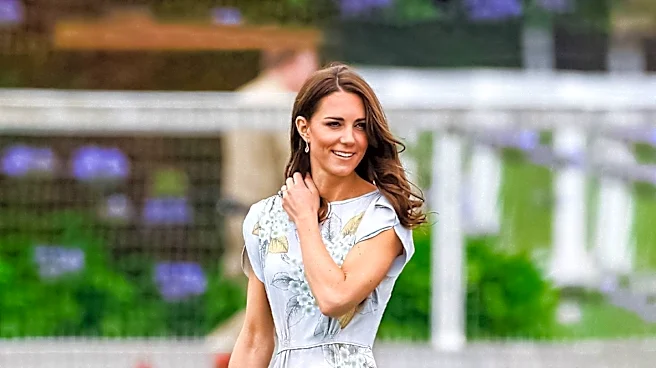
that the palace camp, including King Charles, Prince William, and Princess Kate, scored higher in AI-generated responses compared to Harry and Meghan. The study assessed the tone and number of citations in AI responses, revealing that the palace had a more neutral tone, while Harry and Meghan had higher negativity scores. The findings suggest that the monarchy's established infrastructure, such as official websites and historical records, gives them an advantage in AI narratives.
Why It's Important?
The shift in how information is accessed and disseminated through AI platforms presents new challenges and opportunities for public figures like Harry and Meghan. As AI becomes a more dominant source of information, the ability to influence AI-generated narratives could significantly impact public perception. The monarchy's advantage in this area highlights the importance of established, authoritative sources in shaping AI responses. For Harry and Meghan, this represents a potential disadvantage in their ongoing efforts to control their narrative, especially given their contentious relationship with traditional media.
What's Next?
Harry and Meghan may need to adapt their public relations strategies to better engage with AI platforms. This could involve ensuring consistent messaging across various media and leveraging their official channels to provide clear, authoritative information. As AI continues to evolve, the couple might explore new ways to influence AI narratives, potentially by increasing their presence on platforms like Reddit and Wikipedia, which significantly contribute to AI-generated content.
Beyond the Headlines
The development underscores the broader implications of AI in media and public relations. As AI platforms become more influential, the traditional media's role in shaping public narratives may diminish, leading to a shift in how public figures manage their reputations. This could also raise ethical questions about the transparency and accountability of AI-generated content, particularly in how it represents individuals and events.