
What's Happening?
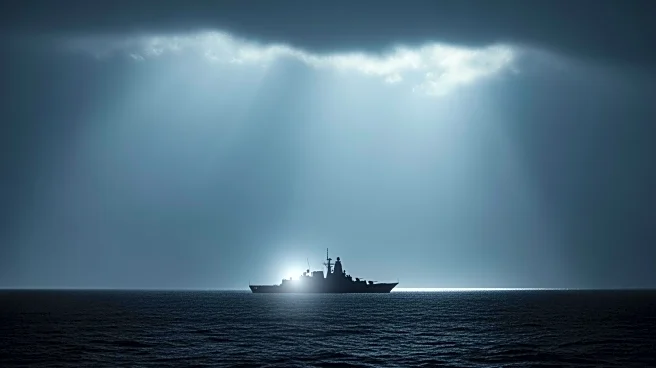
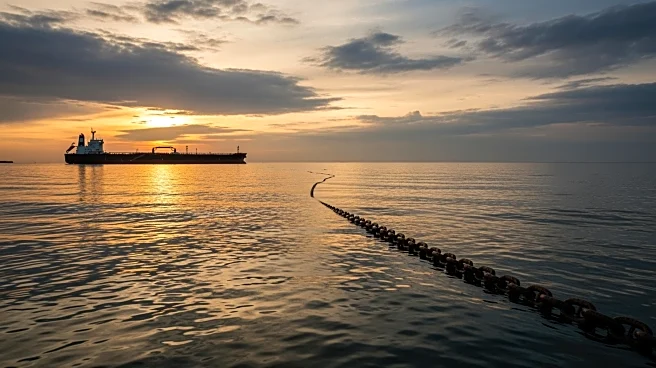
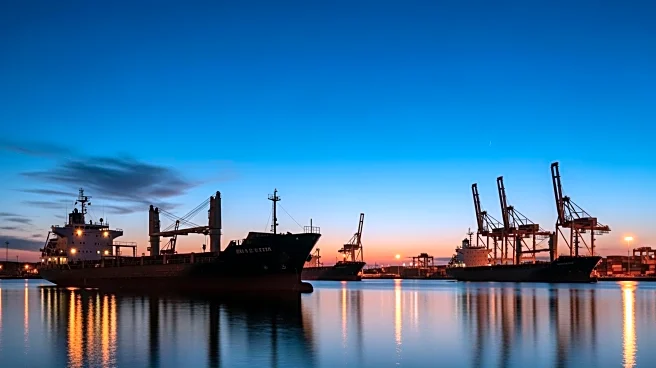
In recent days, dozens of commercial ships have anchored outside Iran's port limits as tensions with the United States escalate. This precautionary measure is reportedly due to ongoing protests in Iran and
the potential risk of collateral damage from air strikes on nearby infrastructure. The U.S. is also withdrawing some personnel from Middle Eastern bases following warnings from Iran that it would target American bases if the U.S. strikes Iran. The number of tankers in Iran's exclusive economic zone has increased significantly, with 36 tankers reported between January 6 and January 12. Additionally, 25 bulk carriers are stationary off the major port of Bandar Imam Khomeini, and another 25 ships, including container and cargo vessels, have anchored off the port of Bandar Abbas.
Why It's Important?
The anchoring of ships outside Iran's ports highlights the heightened geopolitical tensions in the region, which could have significant implications for global trade and energy markets. Iran's reliance on seaborne trade for imports and oil exports means that any disruption could impact global oil prices and supply chains. The situation also underscores the fragile security environment in the Gulf, where interference with navigation systems has increased. This development could lead to further instability in the region, affecting international shipping routes and potentially escalating into broader military conflicts.
What's Next?
As tensions continue to rise, the international community will be closely monitoring the situation for any signs of escalation. The U.S. and its allies may consider diplomatic or military responses to ensure the safety of their interests in the region. Shipping companies might also adjust their routes or schedules to avoid potential conflict zones. Additionally, further protests in Iran could lead to increased domestic instability, prompting more aggressive responses from the Iranian government and potentially drawing in international actors.