

What's Happening?
CAF Airbase Georgia has released an update on the ongoing restoration of its Republic P-47N Thunderbolt, serial number 44-89136. Significant progress has been made on various systems, including hydraulics, electrical components, the canopy, and oil-cooling
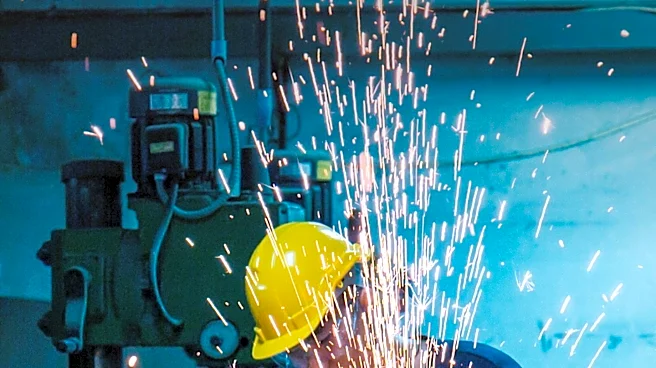
systems. Volunteers have been actively installing the oil tank, hydraulic components, landing gear hardware, and wiring throughout the aircraft. Extensive sheet-metal repairs are also underway, particularly around the wings, leading edges, gun bays, and closeout panels. Much of this work involves manufacturing replacement parts for those that are missing or too damaged to be reused, such as a curved fitting for a gun bay door and the missing hydraulic reservoir. The sheet-metal team, which includes retired Delta Air Lines personnel, is fabricating complex components like wing closeout panels. Machinist John Flynn is leading the reconstruction of the missing rudder bar and pedal assembly using original Republic Aviation drawings. The electrically operated canopy has been rewired and tested, with wiring bundles tied in a historically accurate manner.
Why It's Important?
This restoration project is important for preserving a significant piece of U.S. aviation history, specifically a P-47N Thunderbolt, which played a crucial role in World War II. The meticulous work by CAF Airbase Georgia ensures that future generations can learn about and appreciate the engineering and historical context of these aircraft. The involvement of skilled volunteers, including retired professionals, highlights the dedication of the aviation community to heritage preservation and provides a valuable outlet for their expertise. The project also serves as an educational resource, allowing visitors to observe the restoration process firsthand and understand the complexities of vintage aircraft. Once completed, the flying P-47N will be a powerful educational tool, appearing at airshows and exhibitions, thereby promoting interest in aviation, engineering, and history across the U.S.
What's Next?
The CAF Airbase Georgia team will continue with the detailed restoration work, focusing on completing the rudder bar assembly, installing hydraulic uplocks, landing gear stops, and additional lines and fittings. The goal is to return the interior of the Thunderbolt to a complete and recognizable configuration. The restoration crew anticipates installing the canopy and demonstrating its operation under its own power in the coming months. Further work will involve returning the motor for the intercooler doors and other equipment to the lower fuselage. The project relies heavily on donor contributions for materials and specialized services, but the volunteers remain the primary driving force. The Airbase Georgia facility will continue to be open to visitors on Tuesdays, Thursdays, and Saturdays, allowing the public to follow the Thunderbolt's restoration progress.
Beyond the Headlines
Beyond the immediate goal of restoring a historic aircraft, this project embodies several deeper implications. It represents a tangible link to the U.S.'s industrial and military past, showcasing the ingenuity and manufacturing capabilities of a bygone era. The process of reverse-engineering and fabricating missing parts from original drawings highlights the enduring value of historical documentation and skilled craftsmanship. Furthermore, the project fosters intergenerational knowledge transfer, as experienced volunteers pass on their expertise to new enthusiasts. The P-47N Thunderbolt, once restored, will not just be an artifact but a dynamic educational platform, inspiring interest in STEM fields and military history. It also underscores the role of non-profit organizations like CAF Airbase Georgia in preserving national heritage that might otherwise be lost.