



What's Happening?
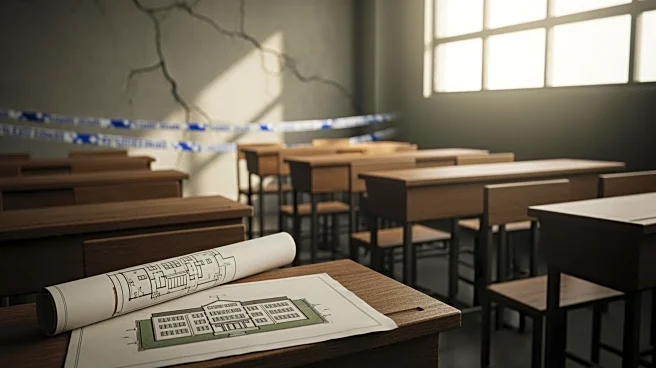
A parliamentary committee has criticized the UK government's handling of the reinforced aerated autoclaved concrete (RAAC) crisis in schools, attributing it to a chronic investment deficit. RAAC, a lightweight concrete used in public buildings from the 1950s
to the mid-1990s, poses a collapse risk after its 30-year lifespan. Despite efforts to remove RAAC from schools, significant risks remain due to underinvestment. The committee calls for a long-term investment strategy to address the aging school estate and ensure safe learning environments.
Why It's Important?
The RAAC crisis highlights the broader issue of underinvestment in public infrastructure, which can have serious safety implications. The condition of school buildings directly affects the quality of education and the safety of students and staff. Addressing this issue requires substantial financial commitment and strategic planning to ensure that educational facilities are safe and conducive to learning. The government's response to this crisis will be crucial in preventing future safety risks and maintaining public trust in educational institutions.