





What's Happening?
Senator Angela Alsobrooks (D-Md.) and Congressman Sam Liccardo (D-Calif.-16) are pressing Federal Housing Finance Agency (FHFA) Director Bill Pulte to increase lending for 'missing middle' multifamily affordable housing. This initiative, reported on September
24, 2026, aims to reform the Federal Home Loan Bank (FHLB) system to direct more capital towards 5-to-49-unit multifamily housing developments for both ownership and rental. The lawmakers highlighted a significant financing gap for these types of developments, which are often too large for conventional single-family lending but too small to attract institutional capital. They propose that the FHFA leverage its existing authority as the FHLB system regulator to encourage FHLBanks to prioritize targeted advances and lending products for these 'missing middle' projects. This effort aligns with Executive Order 14393, 'Promoting Access to Mortgage Credit,' which directs the FHFA to consider creating targeted FHLB liquidity programs for entry-level housing and small residential builders. The lawmakers also suggested incorporating 'missing-middle' lending data into future reports to key government bodies.
Why It's Important?
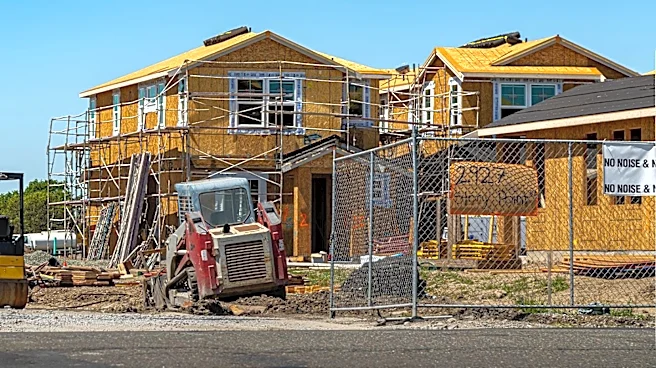
This push for 'missing middle' housing funding is crucial for addressing the nationwide shortage of affordable housing, particularly in urban and rural communities. The current financing gap leaves many developers unable to build properties with 5 to 49 units, which are vital for providing diverse housing options. By directing more capital through the FHLB system, the FHFA could stimulate construction and rehabilitation of these properties, expanding affordable rental and homeownership opportunities without additional taxpayer spending. The FHLB system, with its $1.43 trillion in assets and an estimated $7 billion annual federal guarantee, is uniquely positioned to close this gap. Increased investment in this sector could lead to tens of thousands of additional housing units, easing housing pressures and potentially stabilizing housing costs for a significant portion of the population. This initiative could also foster economic growth by supporting small-scale housing projects and builders.
What's Next?
Following the urging from Senator Alsobrooks and Congressman Liccardo, the FHFA Director Bill Pulte is expected to consider their recommendations. The lawmakers have encouraged the FHFA to take steps such as encouraging FHLBanks to prioritize targeted advances and lending products for 5-49-unit construction and rehabilitation. They also suggested that FHLBanks build underwriting capacity and pilot programs specifically for 'missing-middle' lending. Furthermore, the integration of 'missing-middle' lending data into future reports to the National Economic Council, Office of Management and Budget, and Congress will be a key step in monitoring progress and ensuring accountability. The implementation of these measures would signify a strategic shift in how the FHLB system supports housing development, potentially leading to new policies and programs designed to address the financing challenges faced by developers of mid-sized multifamily properties.
Beyond the Headlines
The focus on 'missing middle' housing highlights a systemic issue in the U.S. housing market where traditional financing models often overlook a critical segment of housing development. This segment is essential for creating diverse, walkable communities and providing housing options that cater to a broader range of income levels, bridging the gap between single-family homes and large apartment complexes. The proposed reforms could lead to a more equitable distribution of housing resources and foster community development. By leveraging the FHLB system's existing financial infrastructure, the initiative aims to achieve significant social and economic benefits without direct federal appropriations, demonstrating an innovative approach to public-private partnerships in addressing housing affordability. This could set a precedent for how federal agencies can use their regulatory authority to influence market behavior towards socially beneficial outcomes.