

What's Happening?
The U.S. Department of Justice (DOJ) is conducting an inquiry into Cuban government officials, which could lead to indictments against leaders of the Communist regime. This initiative is led by Jason Reding Quiñones, the U.S. Attorney for the Southern
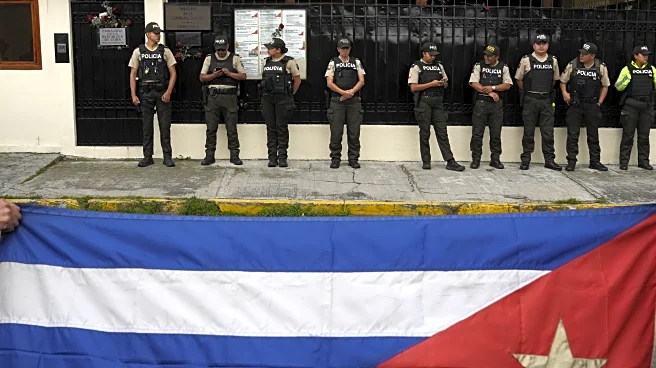
District of Florida, and involves federal prosecutors and officials from various agencies, including the Treasury and State Departments. The investigation aims to build criminal cases against individuals within the Cuban government, potentially leading to actions similar to those taken against Venezuelan dictator Nicolas Maduro. The move comes as President Trump has suggested that Cuba's Communist regime is nearing its end. Cuban-American lawmakers have urged the DOJ to indict Raul Castro for his alleged role in the 1996 shootdown of two planes belonging to the humanitarian group Brothers to the Rescue.
Why It's Important?
This investigation signifies a potential shift in U.S. policy towards Cuba, focusing on holding its leaders accountable for past actions. If successful, it could lead to significant political changes in Cuba, impacting U.S.-Cuba relations. The inquiry also highlights the ongoing influence of Cuban-American lawmakers in shaping U.S. foreign policy. The potential indictments could serve as a warning to other authoritarian regimes about the consequences of human rights violations. Additionally, this move could strengthen the U.S.'s stance on transnational crime and its commitment to justice for American citizens affected by foreign actions.
What's Next?
If the DOJ proceeds with indictments, it could lead to increased tensions between the U.S. and Cuba. The Cuban government may respond with diplomatic protests or seek support from allies. The U.S. could face challenges in enforcing any legal actions against Cuban leaders, given the complexities of international law and diplomacy. The situation may also influence upcoming U.S. elections, as candidates address foreign policy and national security issues. The outcome of this investigation could set a precedent for how the U.S. deals with other regimes accused of human rights abuses.