





What's Happening?
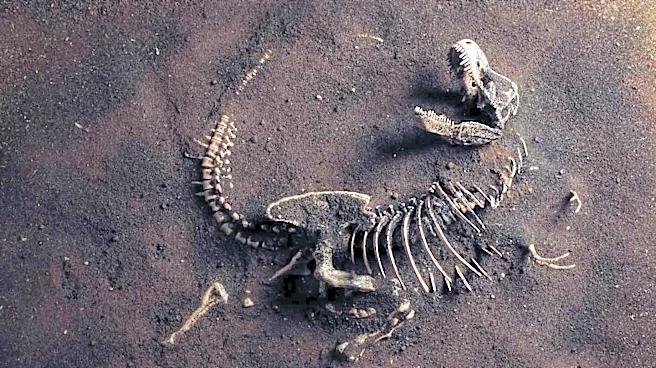
A new species of dinosaur, named Invictibellatrix amberina, has been identified from a fossil that remained unstudied in a London museum drawer for nearly a century. This discovery marks the first megaraptoran found in Europe. The fossil, a part of a skull,
was acquired by the Natural History Museum in 1924 after being found on the Isle of Wight by amateur palaeontologist Reginald Walter Tooley. Invictibellatrix amberina was a two-legged carnivore, comparable in size to a large tiger, measuring three to four meters long and over a meter and a half tall. It possessed feathers and claws between 10 and 20 centimeters long. This dinosaur lived in the UK approximately 120 million years ago during the early Cretaceous period and was closely related to tyrannosaurs. According to Dr. Cassius Morrison, the lead author of the study published in the journal Royal Society Open Science, this predator would have hunted small dinosaurs, lizards, and mammals. The research was funded by the Palaeontographical Society, the Royal Society, and UK Research and Innovation.
Why It's Important?
The identification of Invictibellatrix amberina is significant for several reasons. It expands the known geographical range of megaraptorans, a group of predatory dinosaurs previously thought to have originated in Asia before migrating through Europe. This discovery provides new insights into the prehistoric ecosystems of Europe during the early Cretaceous period, suggesting a more diverse predatory fauna than previously understood. The fact that such a significant fossil remained overlooked for so long highlights the potential for further discoveries within existing museum collections, underscoring the importance of re-examining historical specimens. For paleontologists, this finding offers a deeper understanding of dinosaur evolution and migration patterns, particularly concerning the relationships between different predatory groups like megaraptorans and tyrannosaurs. The study also emphasizes the contributions of amateur paleontologists in unearthing crucial scientific data.
What's Next?
The discovery of Invictibellatrix amberina may prompt further re-examination of existing fossil collections in museums worldwide, particularly those with specimens from the Isle of Wight and other European sites. Researchers may now focus on identifying additional megaraptoran fossils in Europe to better understand their distribution, evolutionary history, and ecological roles. Future studies could involve more detailed analyses of the Invictibellatrix amberina fossil to uncover more about its physiology, hunting strategies, and precise phylogenetic placement. The success of this discovery could also encourage increased funding and resources for paleontological research, especially for projects that involve revisiting historical collections. Additionally, the Isle of Wight, already known for its rich fossil record, may see renewed interest in further excavations, potentially leading to the discovery of more previously unknown species.
Beyond the Headlines
This discovery underscores a broader theme in scientific research: the value of revisiting and re-evaluating existing data and collections. The 'overlooked' status of the fossil for nearly a century highlights how scientific understanding evolves with new methodologies, technologies, and perspectives. It also serves as a reminder that significant scientific breakthroughs can emerge from unexpected places, even from museum drawers. Ethically, it raises questions about the thoroughness of initial cataloging and research practices in the past, while also celebrating the diligence of modern paleontologists who revisit these archives. Culturally, the naming of the dinosaur, 'Invictibellatrix amberina' (unconquered female warrior), adds a layer of symbolic significance, reflecting contemporary values in scientific nomenclature. This event could inspire a new generation of paleontologists to explore both the field and the archives, recognizing that the past holds many secrets yet to be uncovered.