



What's Happening?
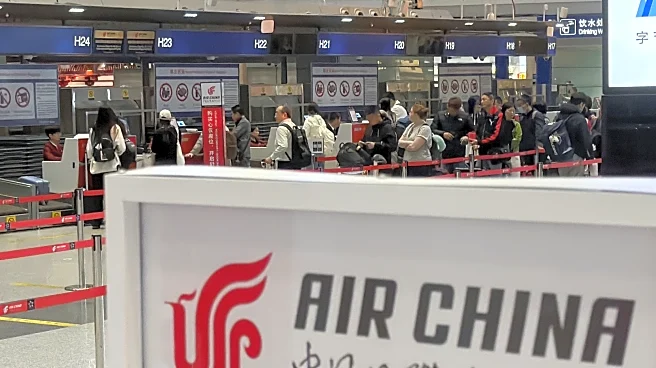
Air China has restarted direct flights to North Korea after a six-year pause, marking a significant step in the gradual reopening of North Korea to international travel. This development follows the recent resumption of train services between Beijing
and Pyongyang. China, North Korea's largest trading partner and a key ally, has historically expressed disapproval of North Korea's missile tests, which have been a point of tension. The resumption of flights is seen as part of a cautious normalization of relations between the two countries. Prior to the travel ban, Chinese tourists constituted 90% of all visitors to North Korea, and the delay in resuming these tours had surprised many observers.
Why It's Important?
The resumption of flights between China and North Korea is significant as it indicates a potential thaw in relations and a step towards normalizing travel and trade between the two nations. This move could have economic implications, particularly for North Korea, which relies heavily on Chinese tourism and trade. For China, maintaining stable relations with North Korea is crucial for regional stability and economic interests. The development also reflects China's strategic balancing act of supporting North Korea while managing international concerns over its missile programs.
What's Next?
The resumption of flights may lead to increased economic activity and tourism in North Korea, potentially boosting its economy. However, the international community will likely continue to monitor North Korea's missile activities closely. China's role as a mediator and ally will be crucial in influencing North Korea's actions and maintaining regional stability. Future developments may include further easing of travel restrictions and increased diplomatic engagements between the two countries.