








What's Happening?
A 79-year-old Gresham man, identified as Steven, reported losing $40,000 after falling victim to a jury duty scam. The Multnomah County Sheriff’s Office stated that an individual posing as a Multnomah County sheriff’s lieutenant contacted Steven, falsely
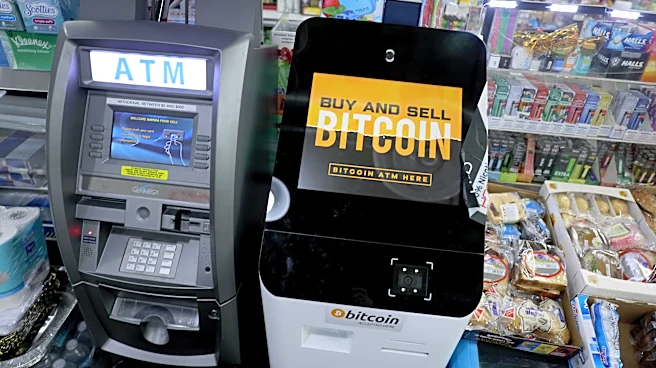
claiming he had missed jury duty and would face arrest unless he paid a fine. Steven subsequently made two $20,000 withdrawals from his bank and deposited the cash into Bitcoin kiosks at a convenience store in southeast Portland, as directed by the scammers. His daughter, Tarisa, informed KOIN that her father was instructed to use four or five different machines. The Multnomah County Sheriff's Office has clarified that they do not collect money for missed jury duty, a warning previously issued in December 2025. Deputy John Plock advised the public that law enforcement agencies do not call to collect fines and urged individuals receiving such calls to hang up. This incident highlights a recurring scam tactic, with a separate report from May 2024 detailing a similar attempt where a caller, impersonating a sheriff's officer, demanded $3,000 at an ATM under threat of arrest.
Why It's Important?
This incident underscores the significant financial risks associated with imposter scams, particularly those targeting older adults and utilizing less conventional payment methods like Bitcoin kiosks. The reported $40,000 loss by a single individual illustrates the substantial financial impact these scams can have on victims. The use of Bitcoin ATMs in such schemes is a growing concern, with an Oregon Division of Financial Regulation alert, citing Federal Trade Commission data, indicating over $110 million in scam losses involving Bitcoin ATM machines in 2023—a tenfold increase since 2020. Furthermore, the Federal Trade Commission reported that 33% of older adults who lost at least $10,000 to business or government imposter scams in 2024 used cryptocurrency as the payment method, with most reports specifically mentioning Bitcoin ATMs. This trend highlights a vulnerability in financial security for a demographic often targeted by fraudsters, emphasizing the need for increased public awareness and education regarding these evolving scam tactics.
What's Next?
Authorities will likely continue to investigate this specific case, though the source does not indicate whether the money was recovered or if any suspects have been identified. The Multnomah County Sheriff's Office and other regulatory bodies are expected to persist in their efforts to educate the public about imposter scams, particularly those involving threats of arrest for missed jury duty and the use of cryptocurrency for payments. Public awareness campaigns will likely emphasize that legitimate law enforcement agencies do not demand immediate payment via unconventional methods. Financial institutions and cryptocurrency kiosk operators may face increased scrutiny or calls for enhanced security measures to prevent their services from being exploited by scammers. The daughter of the victim, Tarisa, expressed her desire for the scam to be exposed to prevent others from suffering similar losses, suggesting a continued focus on public outreach.
Beyond the Headlines
The proliferation of scams utilizing Bitcoin kiosks raises broader questions about the regulatory oversight of cryptocurrency transactions and the responsibility of service providers in preventing illicit activities. While cryptocurrency offers benefits like decentralization and speed, its irreversible nature and relative anonymity can make it an attractive tool for fraudsters, complicating recovery efforts for victims. The targeting of older adults in these scams also highlights societal vulnerabilities, prompting discussions about digital literacy and financial protection for vulnerable populations. The repeated nature of these imposter scams, as evidenced by previous reports, suggests a systemic challenge in combating sophisticated fraud operations that exploit trust in authority figures. This situation may lead to calls for stricter regulations on cryptocurrency kiosks or enhanced collaboration between law enforcement, financial institutions, and tech companies to develop more robust preventative measures and victim support systems.