







What's Happening?
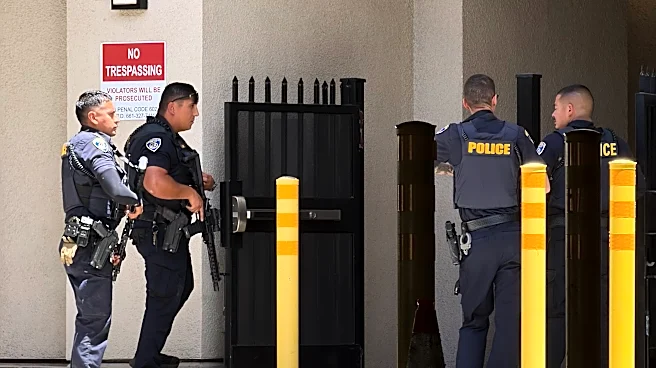
In Portland, Oregon, a tense situation unfolded in the Hazelwood neighborhood as police responded to a hostage situation early Friday morning. The incident began around 5:30 a.m. when officers were alerted to a disturbance involving a weapon on Northeast
122nd Avenue. An armed suspect reportedly held a woman hostage inside an apartment. The Special Emergency Reaction Team (SERT) and the Crisis Negotiation Team (CNT) were deployed to manage the situation. By 8 a.m., the woman was safely released and is now with the police. The suspect remains barricaded inside the apartment, and tactical teams have used munitions in an attempt to communicate with him. No injuries have been reported so far. The area has been cordoned off, and residents have been advised to shelter in place as the situation develops.
Why It's Important?
This incident highlights the ongoing challenges faced by law enforcement in managing high-stakes situations involving armed suspects and hostages. The deployment of specialized tactical and negotiation teams underscores the seriousness of the threat and the need for careful handling to ensure public safety. Such events can have significant psychological impacts on local communities, raising concerns about safety and security. The response also reflects the preparedness and coordination required among various police units to handle potentially volatile situations effectively. The outcome of this standoff could influence public perception of police efficacy and community trust in law enforcement agencies.
What's Next?
As the situation is still unfolding, the immediate focus remains on resolving the standoff without further escalation. Police are likely to continue negotiations with the suspect to secure a peaceful surrender. The incident may prompt discussions on community safety measures and the effectiveness of current police protocols in handling similar situations. Depending on the resolution, there could be further investigations into the suspect's motives and background, which might lead to legal proceedings. Community leaders and law enforcement officials may also engage in dialogues to address public concerns and reinforce community-police relations.