



What's Happening?
A federal judge has extended her ban on President Trump's executive order that aimed to restrict mail voting, replacing a temporary order with a preliminary injunction. This executive order, signed in March, mandated that states submit lists of eligible
voters to the U.S. Postal Service (USPS) via an online portal to prevent non-citizens from voting. Under this directive, the USPS could refuse to deliver ballots if the name on the envelope did not match the voter list. Senator Richard Blumenthal (D-Conn.) raised concerns about these restrictions after receiving a whistleblower letter. The whistleblower warned that the USPS was struggling to develop the online system, and that potential failures could lead to entire batches of blank ballots being returned before reaching voters, thereby jeopardizing the midterm elections. The administration is facing a tight timeline to implement these limitations as states, including North Carolina and Alabama, have begun or are scheduled to begin sending out mail ballots.
Why It's Important?
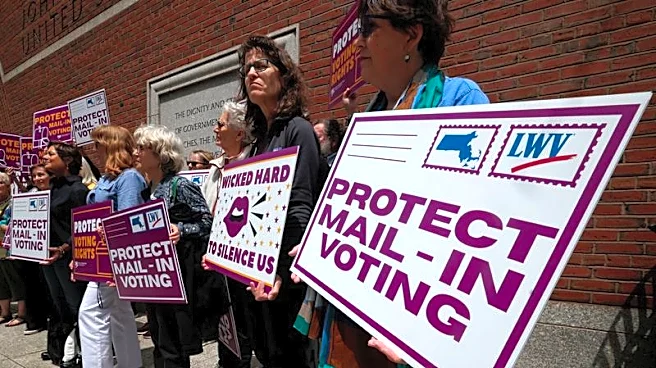
This judicial intervention is crucial for the integrity and accessibility of the upcoming midterm elections. The Trump administration's executive order, if implemented, could have disenfranchised millions of eligible voters by creating new hurdles for mail-in ballots. The concerns raised by Senator Blumenthal and the whistleblower highlight potential systemic failures within the USPS's proposed online verification system, which could lead to widespread ballot rejections. With states already beginning to dispatch ballots, the judge's decision ensures that voters will not face last-minute changes or complications that could deter them from participating. The ongoing legal battle underscores the broader political tension surrounding voting rights and election security, particularly concerning mail-in voting, which has become a contentious issue in recent U.S. elections. The outcome of such legal challenges directly impacts voter turnout and public confidence in the electoral process.
What's Next?
The legal challenges surrounding the mail voting restrictions are ongoing. The White House has indicated its intention to appeal this latest order and has requested the Supreme Court to intervene. Justice Ketanji Brown Jackson, who oversees appeals in the region where the case was filed, has given challengers until Tuesday to submit their arguments. This timeline suggests that any Supreme Court decision on the matter is unlikely to occur before the middle of next week, at the earliest. In the interim, the preliminary injunction remains in effect, preventing the USPS from implementing the contested restrictions. The focus will now shift to the Supreme Court's review and its potential impact on the administration's ability to enforce the executive order as the midterm elections draw nearer and more states begin sending out ballots.
Beyond the Headlines
The dispute over mail voting restrictions extends beyond immediate electoral concerns, touching upon fundamental questions of democratic access and federal overreach. The administration's justification for the order—preventing non-citizen voting—is part of a broader narrative that questions the security of mail-in ballots, a narrative that has been amplified in recent election cycles. Critics argue that such measures disproportionately affect certain demographics and could suppress voter turnout, particularly among those who rely on mail voting due to disability, age, or geographical distance. The whistleblower's account of the USPS's unpreparedness further highlights the practical challenges and potential for chaos if such significant changes are rushed without adequate infrastructure. This case also reflects the increasing politicization of election administration, where procedural changes are viewed through a partisan lens, potentially eroding public trust in governmental institutions and the electoral system itself.