





What's Happening?
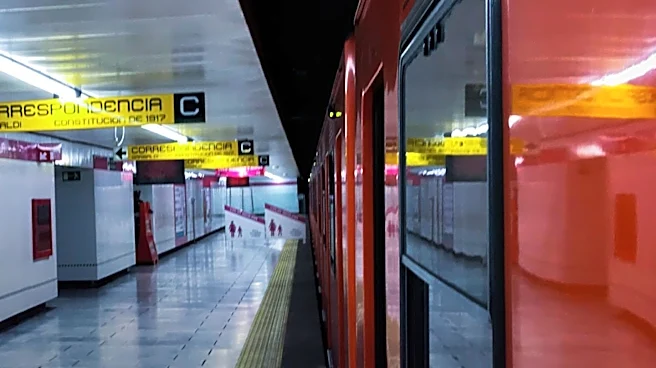
Commuters on Metro’s Red Line are welcoming the reopening of three stations—Grosvenor-Strathmore, Medical Center, and Bethesda—following a nine-week partial summer shutdown. The shutdown, which began on July 6, was implemented to facilitate major construction
work on the system’s busiest rail line. During the closure, Metro provided free shuttle buses along Maryland Route 355, also known as Rockville Pike and Wisconsin Avenue, between North Bethesda and Friendship Heights, transporting over 1.2 million riders. Commuters expressed relief and satisfaction with the reopening, noting the convenience of returning to train service. Many observed upgrades, including new train arrival boards and improved flooring at the stations. The Maryland State Highway Administration has also begun the process of removing temporary bus lanes that were used along MD 355 during the shutdown, with this work expected to continue through September 11.
Why It's Important?
The reopening of these Metro Red Line stations is crucial for thousands of daily commuters in the Washington D.C. metropolitan area, particularly those traveling to and from Maryland. The Red Line is a vital artery for regional transportation, connecting residential areas with major employment centers, medical facilities like Walter Reed Army Medical Center, and commercial districts. The completion of the construction work aims to improve the reliability and efficiency of the rail line, enhancing the overall commuting experience and reducing travel times that were extended during the shutdown. A well-functioning public transportation system is essential for regional economic activity, supporting businesses by facilitating employee commutes and customer access. The upgrades observed by commuters suggest an investment in modernizing infrastructure, which can lead to increased ridership and a more sustainable urban environment by reducing reliance on personal vehicles.
What's Next?
With the Red Line stations now operational, commuters can expect a return to regular service, significantly reducing travel times and improving daily routines. The Maryland State Highway Administration will continue its work to remove temporary bus lanes along MD 355, restoring normal traffic flow in those areas. This process, involving the removal of lane markings and restoration of striping for on-street parking, is anticipated to be completed by September 11. Metro will likely monitor the performance of the newly upgraded sections of the Red Line to ensure the effectiveness of the construction work. Future maintenance and upgrade projects may be planned based on ongoing assessments of the system's infrastructure. The successful completion of this major project may also inform future strategies for managing large-scale public transit construction with minimal disruption.
Beyond the Headlines
The extensive nine-week shutdown and the subsequent reopening highlight the ongoing challenges and necessities of maintaining and upgrading aging public transportation infrastructure in major U.S. cities. Such projects, while disruptive in the short term, are vital for ensuring the long-term viability and safety of transit systems. The reliance on shuttle buses during the closure also underscores the importance of robust contingency plans and multimodal transportation options. This event could spark broader discussions about funding for public transit infrastructure, the balance between necessary upgrades and commuter convenience, and the role of public-private partnerships in facilitating such projects. The positive reception from commuters post-reopening suggests that investments in infrastructure, when effectively communicated and executed, can significantly enhance public satisfaction and support for public transit initiatives, contributing to more sustainable urban development.