






What's Happening?
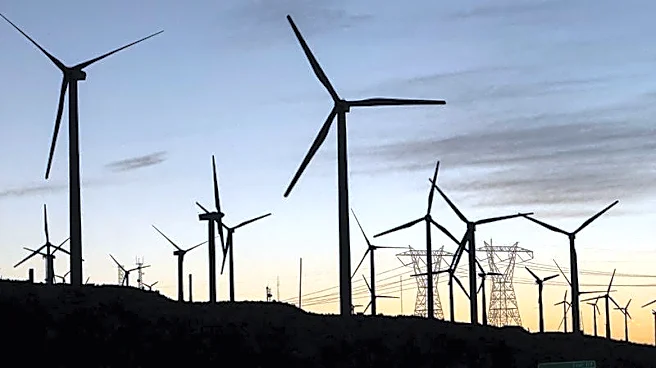
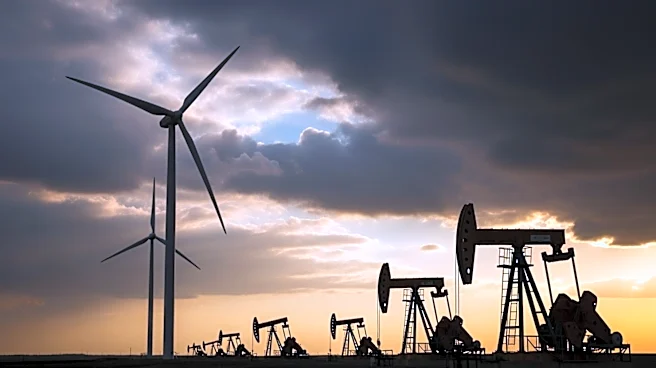
The Trump administration has implemented policies that restrict wind energy development while promoting oil, gas, and nuclear projects. This includes blocking 165 wind projects and offering financial incentives for companies to abandon offshore wind initiatives.
The administration cites national security concerns as a justification for these actions, claiming that wind turbines pose potential threats. In contrast, the administration supports fossil fuel and nuclear energy projects, including microreactor developments on military installations.
Why It's Important?
The administration's focus on fossil fuels and nuclear energy represents a significant shift from the previous decade's renewable energy expansion. This policy change could impact the U.S. energy landscape, potentially slowing the transition to renewable energy sources. The emphasis on national security concerns related to wind energy has drawn skepticism from experts and lawmakers. The administration's approach may face legal challenges and opposition from states and environmental groups advocating for renewable energy.
What's Next?
Legal challenges against the administration's wind energy restrictions are likely to continue. Courts have already blocked some executive actions, and further litigation could shape the future of U.S. energy policy. The administration's promotion of fossil fuels and nuclear energy may face scrutiny from environmental advocates and policymakers pushing for a cleaner energy transition. The outcome of these conflicts will influence the direction of U.S. energy policy and its alignment with global renewable energy trends.