


What's Happening?
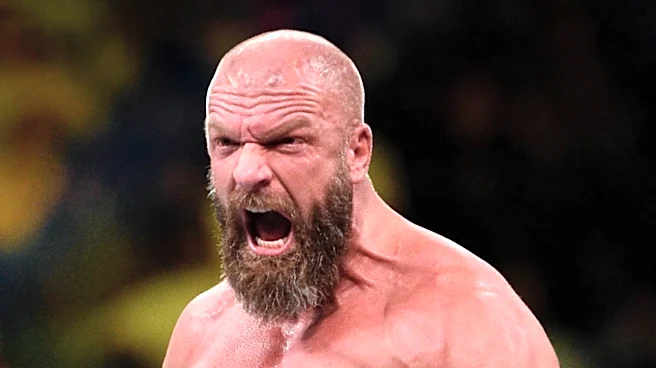
Stephanie McMahon, during an episode of her 'What’s Your Story?' podcast, recounted an incident where individuals attempted to provoke her husband, Triple H, following President Trump's first inauguration. The couple was in Washington D.C. for the inauguration because
Linda McMahon, Stephanie's mother, was entering the administration as the head of the Small Business Administration. While waiting at a train station after the events, Stephanie observed people at a nearby table recognizing Triple H and connecting him to Linda McMahon and the incoming Trump administration. According to Stephanie, these individuals were openly hostile towards the administration and her mother's involvement, and they actively tried to incite Triple H into an angry reaction, with cameras ready to record. Triple H, however, did not engage with the provocateurs, and the situation diffused without further incident, though Stephanie noted the palpable tension.
Why It's Important?
This anecdote offers a glimpse into the heightened political polarization and public sentiment surrounding President Trump's administration, even during its initial days. It illustrates how individuals associated with the administration, even indirectly through family ties, could become targets of public animosity. The incident underscores the challenges public figures and their families face in navigating a politically charged environment, where personal interactions can quickly escalate and be documented for public consumption. For the McMahon family, with their prominent roles in entertainment and Linda McMahon's political appointment, such encounters highlight the blurring lines between personal and public life, and the constant scrutiny they endure. It also reflects a broader societal trend where political disagreements can manifest in direct, confrontational ways in everyday settings.
What's Next?
While this specific incident is a past event, it serves as a reminder of the ongoing political divisions within the U.S. and the potential for public figures to encounter similar situations. The story contributes to the narrative of a deeply polarized nation, where political affiliations can lead to unexpected confrontations. For public figures, it reinforces the need for discretion and composure in public spaces, as any reaction can be amplified through social media and news cycles. The broader implication is that the political climate continues to influence personal interactions and public discourse, making it challenging for individuals with public profiles to maintain neutrality or avoid being drawn into political debates, even when they prefer to remain apolitical, as Stephanie McMahon expressed.
Beyond the Headlines
The incident described by Stephanie McMahon touches upon the ethical dimensions of public engagement and the responsibilities of individuals in a democratic society. While freedom of expression is a fundamental right, the line between expressing dissent and attempting to provoke a confrontation is often debated. The presence of cameras, ready to capture any reaction, highlights the 'gotcha' culture prevalent in the digital age, where moments of tension can be weaponized or sensationalized. This situation also speaks to the psychological toll that intense political polarization can take on individuals, both those in the public eye and ordinary citizens. It raises questions about the civility of public discourse and the potential for political differences to erode respectful interaction, even in casual settings. The story implicitly calls for a reflection on how individuals can engage in political expression without resorting to personal attacks or incitement.