

What's Happening?
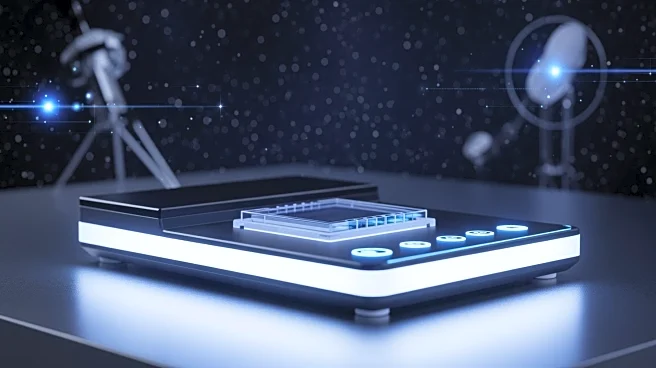
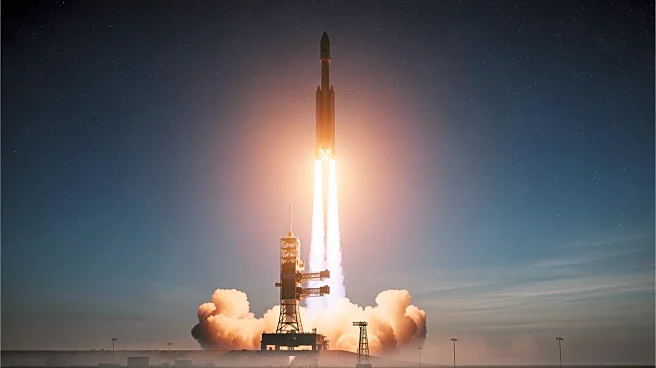
NASA has introduced a compact microplate reader to the International Space Station (ISS) as part of its SpaceX Crew-12 mission. This device, comparable in size to a cellphone, is designed to conduct biological research in space, providing real-time data
access. The initiative is part of NASA's Commercially Enabled Rapid Space Science (CERISS) program, which collaborates with industry to enhance space research capabilities. The microplate reader allows for immediate data analysis, eliminating the need to return samples to Earth for testing. This advancement could significantly reduce delays and costs associated with space research. The device, which requires a trained astronaut for operation, uses light wavelengths to detect color changes in biological tests, indicating the presence and quantity of target molecules. Initially, it will be used to measure interleukin-6, a protein linked to bone loss in astronauts, as part of the Microgravity Associated Bone Loss-B (MABL-B) investigation.
Why It's Important?
The introduction of the microplate reader on the ISS represents a significant leap in space research efficiency. By enabling in-situ analysis, NASA can accelerate the pace of scientific discovery and reduce the logistical challenges of returning samples to Earth. This capability is crucial for long-duration missions, where monitoring astronaut health in real-time is vital. The device's adaptability for various tests could lead to broader applications in space exploration, supporting human health and safety in deep space missions. Furthermore, the successful integration of commercial lab equipment into space operations could stimulate growth in the commercial space industry, fostering a more robust low Earth orbit research economy.
What's Next?
NASA plans to continue testing the microplate reader with additional samples and experiments on the ISS. Future missions may see expanded use of this technology, potentially leading to automation and more advanced testing capabilities. As the device proves its utility, it could become a standard tool for space missions, supporting a wide range of biological and physical science research. The success of this initiative may encourage further collaboration between NASA and commercial partners, driving innovation and efficiency in space research.