







What's Happening?
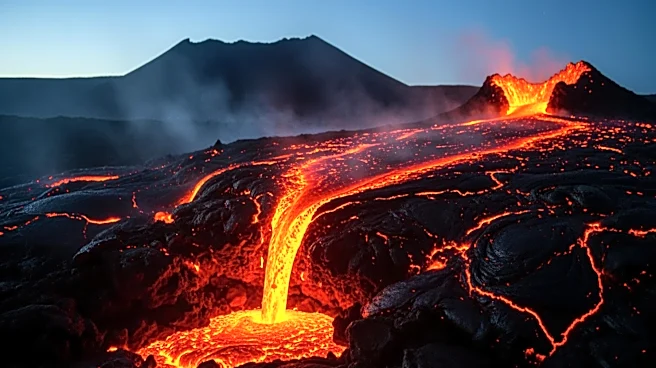
Hawaii's Kilauea volcano has set a new record for the number of lava fountaining episodes during its ongoing eruption, which began in December 2024. As of Monday, the volcano has experienced 48 such episodes, surpassing previous records. The Hawaiian
Volcano Observatory reports that these episodes are separated by periods of little to no lava activity, all originating from the same vents at the summit crater. The eruption is notable not only for its record-breaking nature but also for its accessibility to residents and tourists, unlike a similar event in the 1980s that occurred in a more remote area. The ongoing volcanic activity is reshaping the summit's topography and poses potential risks to nearby communities due to volcanic fragments and ash, known as tephra.
Why It's Important?
The record-breaking eruption of Kilauea has significant implications for both local residents and the tourism industry in Hawaii. The accessibility of the eruption site offers a unique opportunity for tourism, potentially boosting local economies. However, the volcanic activity also poses risks, such as air quality issues and potential damage from volcanic fragments and ash. The ongoing reshaping of the summit's topography could have long-term geological impacts. Additionally, the eruption serves as a reminder of the dynamic nature of volcanic activity and the need for continuous monitoring and preparedness to mitigate risks to human health and infrastructure.