







What's Happening?
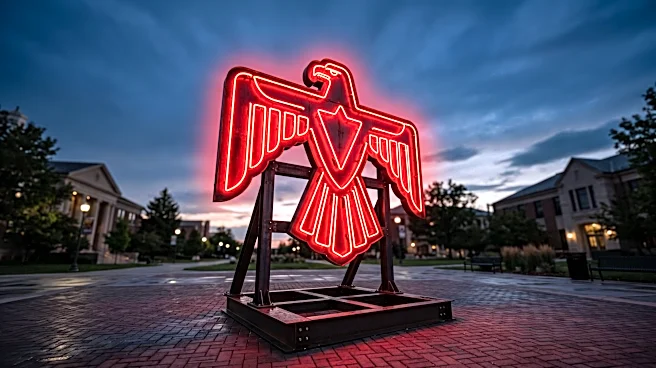
The neon Thunderbird sign at Casper College in Wyoming has been fully restored and is now brightly illuminated again, following significant damage caused by high winds a couple of years ago. Local neon artist Connie Morgan, who initially installed the
neon on the sign, was commissioned for its repair and reinstallation. The original sign was fabricated by welding students in the early 1960s. The neon was first added in fall 2023, but the sign was subsequently toppled by strong winds due to an issue with its base, which Morgan attributes to an additional bolt being placed too close to existing ones, weakening the structure. The recent restoration involved Morgan re-forming and installing new neon tubes, which glow red to match the college's colors. The base has also been improved to better withstand Wyoming's notorious gusts, ensuring the sign's stability.
Why It's Important?
The restoration of the Casper College Thunderbird sign holds cultural and symbolic importance for the college community and the local area. As a long-standing mascot, its visible presence contributes to the campus identity and spirit. The incident highlights the challenges faced by outdoor installations in regions prone to extreme weather, such as Wyoming's high winds, and the need for robust engineering solutions. The involvement of a local artist like Connie Morgan also underscores the value of specialized craft and local talent in preserving and enhancing community landmarks. The sign's resilience, much like the mythical Phoenix, can serve as a metaphor for the college's enduring spirit and ability to overcome adversity, fostering a sense of pride and continuity among students, faculty, and alumni.
What's Next?
With the improved base and newly installed neon, the Casper College Thunderbird sign is expected to remain a prominent and stable feature on campus. The college and local community will likely continue to enjoy its illuminated presence, serving as a beacon and symbol. There are no immediate plans for further modifications or repairs, as artist Connie Morgan expressed confidence in the current installation's ability to withstand future wind events. The successful restoration may also encourage other institutions or businesses in wind-prone areas to review the structural integrity of their outdoor signage and installations, potentially leading to increased demand for specialized artists and engineers capable of creating durable and aesthetically pleasing public art.
Beyond the Headlines
The story of the Casper College Thunderbird sign extends beyond a simple repair, touching upon themes of community heritage, artistic craftsmanship, and the practical challenges of integrating art with environmental realities. The sign, originally a student project, represents a tangible link to the college's history and the skills fostered within its programs. Connie Morgan's dedication to her craft and her role in both the initial installation and subsequent restoration highlight the often-unsung contributions of local artisans to public spaces. The repeated damage and repair also subtly reflect the ongoing dialogue between human-made structures and natural forces, emphasizing the need for thoughtful design and engineering in environments with harsh conditions. This narrative reinforces the idea that public art is not merely decorative but can embody collective memory, resilience, and local identity.