









What's Happening?
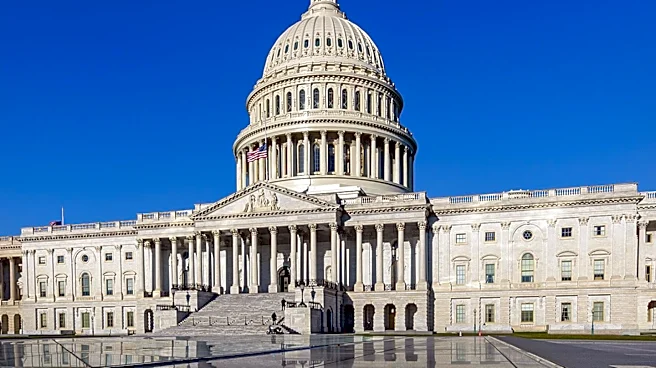
A new bill introduced in the U.S. Senate seeks to impose 100% tariffs on five countries, including India and China, for purchasing Russian oil. The legislation, supported by over 60 lawmakers, aims to cut off revenue streams to Russian President Vladimir
Putin, which are used to finance the war against Ukraine. The bill, named the Lindsey O. Graham Sanctioning Russia Act of 2026, was introduced by Democrat Senator Richard Blumenthal and the late Republican Senator Lindsey Graham. It targets the top five purchasers of Russian crude oil or natural gas and those facilitating sanctions evasion. European nations are exempt if their imports account for less than 15% of Russia's total natural gas exports and if they are actively reducing these imports. The bill also calls for a reassessment of the top purchasers every 180 days to adjust tariff rates.
Why It's Important?
The proposed legislation represents a significant geopolitical move by the U.S. to leverage economic sanctions as a tool to influence international behavior, specifically targeting countries that continue to engage in energy trade with Russia. By imposing such tariffs, the U.S. aims to pressure these nations to reduce their dependency on Russian energy, thereby limiting Russia's financial capacity to sustain its military operations in Ukraine. This move could strain U.S. relations with the affected countries, particularly India and China, and may lead to broader economic implications, including potential retaliatory measures. The bill underscores the U.S.'s commitment to using economic measures to support Ukraine and deter Russian aggression.
What's Next?
If passed, the bill would mark a precedent in U.S. foreign policy by explicitly using tariffs as a geopolitical weapon. The U.S. Trade Representative will need to monitor and reassess the purchasing patterns of the targeted countries every six months, potentially leading to dynamic changes in international trade relations. The bill's progress through Congress will be closely watched, as it could influence global energy markets and diplomatic ties. Additionally, the exemption of European nations highlights the complexity of balancing economic sanctions with geopolitical alliances.