







What's Happening?
The U.S. Food and Drug Administration (FDA) has granted 510(k) clearance to Providence Medical Technology for its CORUS Posterior Cervical Stabilization System 3D-T. This device is designed to stabilize and immobilize spinal segments in conjunction with
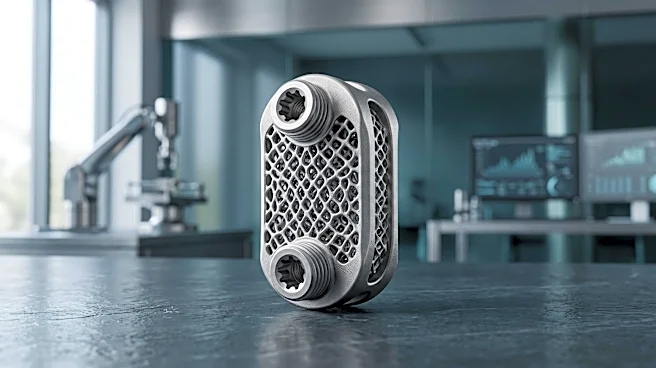
posterior cervical fusion for patients suffering from cervical degenerative disc disease. The CORUS PCSS 3D-T is a bilateral implant manufactured with a 3D porous titanium structure, featuring integrated screw fixation. It is supplied in a single-use, sterile-packaged kit and includes an internal lattice engineered to mimic cancellous bone, promoting bone ingrowth. The design also allows for internal bone graft packing and even distribution of mechanical load across varying patient anatomies. According to Providence Medical Technology President and CEO Lane Major, this clearance marks a significant milestone for the company and the surgeons who rely on their platform, emphasizing the device's foundation in Level 1 evidence, which is rare in spinal procedures.
Why It's Important?
The FDA's clearance of the CORUS PCSS 3D-T spinal device is important for advancing treatment options for cervical degenerative disc disease in the U.S. healthcare system. This approval provides surgeons with a new tool that builds upon existing clinical data, offering a device with enhanced features like a porous titanium structure. The company's focus on supplemental posterior fixation and fusion systems, particularly its Total Segmental Fusion technique, aims to improve fusion rates and reduce the need for subsequent surgical revisions. Higher fusion rates and lower revision rates can lead to better patient outcomes, reduced healthcare costs associated with repeat surgeries, and improved quality of life for individuals suffering from chronic neck pain and instability. The integration of advanced materials and design, such as the 3D porous titanium, reflects a broader trend in medical device innovation towards biomimetic solutions that promote natural healing processes.
What's Next?
Following FDA clearance, Providence Medical Technology will likely focus on the commercialization and widespread adoption of the CORUS PCSS 3D-T device within the U.S. market. This will involve educating surgeons and healthcare providers about the device's benefits, particularly its Level 1 evidence backing and the advantages of its 3D porous titanium structure. The company's commitment to its Total Segmental Fusion technique suggests continued efforts to integrate this new device into comprehensive treatment protocols aimed at predictable fusion and fewer revision surgeries. Future developments may include post-market surveillance to gather additional real-world data on patient outcomes and further research into expanding the device's indications or developing new iterations. The medical community will be observing the long-term efficacy and safety data as the device becomes more widely used in clinical practice.
Beyond the Headlines
The approval of the CORUS PCSS 3D-T highlights the ongoing evolution in spinal surgery, particularly the shift towards devices that optimize the bone-implant interface. The emphasis on a porous lattice structure with increased surface area and roughness, designed to facilitate bone ingrowth, reflects a deeper understanding of biological integration in orthopedic implants. This technological advancement could set new standards for posterior cervical fusion devices, potentially influencing future research and development in spinal implant design. Ethically, the focus on Level 1 evidence and reduced revision rates underscores a commitment to patient safety and long-term well-being, addressing concerns about the durability and effectiveness of spinal interventions. This development also contributes to the broader economic landscape of medical technology, as innovative devices can drive competition and improve the overall standard of care in specialized surgical fields.