





What's Happening?
Students at the University of Delaware are actively protesting the installation of Advanced License Plate Reader (ALPR) technology across campus. The university, under the guidance of Executive Vice President for Finance and Administration Ellen Herbst
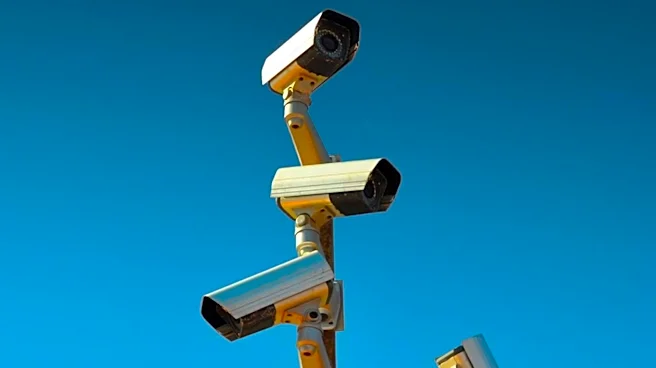
and UDPD Associate Vice President and Chief of Police Patrick Ogden, is enhancing security cameras. Initially, the project was titled 'Flock License Plate Reader Enhancements' but has since been altered to 'Advanced License Plate Reader Technology (ALPR),' with the word 'Flock' removed from public project plans. This change has occurred without official clarification from the university, leading to student concerns about transparency and the specific technologies being deployed. A student group named 'deflock,' led by sophomore public policy major Declan Rooney and sophomore wildlife ecology major Arya Keim, has gained significant social media traction, advocating against what they perceive as mass surveillance. Another student, Jacob Hindin, initiated a Change.org petition against the cameras. ALPRs are AI-powered cameras that capture and analyze images of passing vehicles, recording details such as location, date, time, make, model, color, and identifying features, often converting these into searchable data points. Flock Safety, a company specializing in such technology, produces ALPRs designed to assist law enforcement, businesses, and schools in gathering information for public safety.
Why It's Important?
The student protests at the University of Delaware highlight a growing national debate regarding privacy versus security in the deployment of surveillance technologies, particularly in educational settings. The use of ALPR systems, which collect extensive data on vehicle movements and characteristics, raises significant civil liberties concerns. Students are questioning the scope of data collection, how this data will be stored and used, and who will have access to it. The university's lack of transparent communication regarding the technology change, from explicitly naming 'Flock' to a more generic 'ALPR,' further fuels distrust and suggests an attempt to mitigate public backlash. This situation could set a precedent for how universities balance campus safety initiatives with student privacy rights, potentially influencing policies at other educational institutions considering similar surveillance measures. The outcome of this protest could impact student activism models and the future of privacy advocacy in the digital age, especially concerning AI-powered surveillance tools.
What's Next?
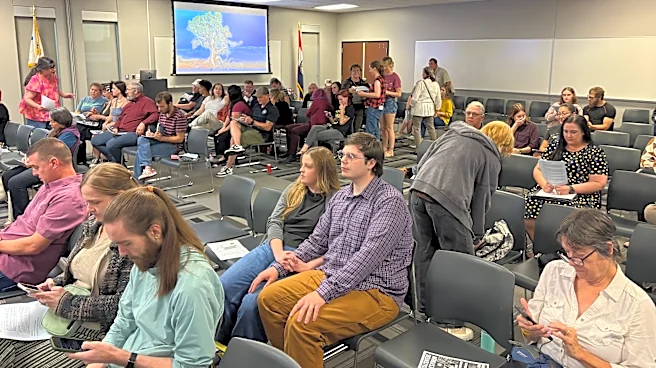
Students involved in the 'deflock' movement and other concerned individuals plan to continue their advocacy, aiming to educate both students and local residents about the implications of ALPR technology. Their ultimate goal is the complete removal of these surveillance systems from campus. They are seeking direct communication with university administrators, including President Laura Carlson and Chief of Police Patrick Ogden, to voice their concerns and demand greater transparency. The university, through Vice President of Public Affairs Rick Deadwyler, has stated that ALPR technology is used by UDPD for legitimate law enforcement purposes, with strong policies governing data access, use, retention, and sharing. However, students remain skeptical and anticipate resistance from the administration. The ongoing dialogue and potential negotiations between students and university officials will determine whether the university re-evaluates its surveillance strategy or if student activism escalates, potentially leading to broader discussions on campus governance and student rights.
Beyond the Headlines
Beyond the immediate concerns of privacy and surveillance, this situation at the University of Delaware touches upon deeper ethical and societal implications of artificial intelligence and data collection. The ALPR systems, with their AI capabilities, represent a significant shift in surveillance methods, moving beyond simple recording to advanced data analysis and pattern recognition. This raises questions about algorithmic bias, the potential for misuse of data, and the erosion of anonymity in public spaces. The students' resistance reflects a broader societal apprehension about the increasing integration of AI into daily life and the potential for a 'surveillance state,' even in seemingly benign environments like university campuses. The debate also highlights the power dynamics between institutions and individuals, particularly concerning the right to privacy in an era where technological advancements often outpace regulatory frameworks and public understanding. The outcome could influence future legal and ethical guidelines for AI-powered surveillance in various public and private sectors.