



What's Happening?
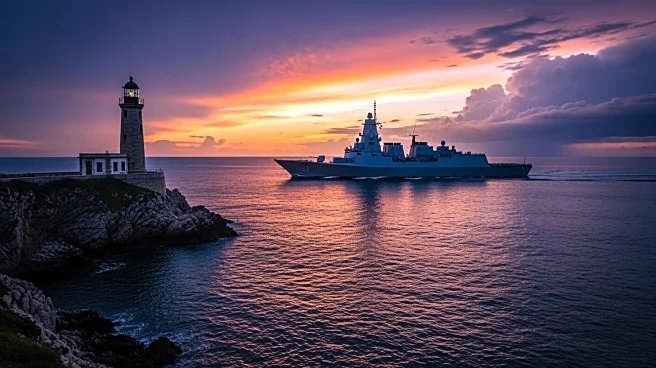
European countries, including Italy, Spain, France, and the Netherlands, have announced plans to deploy naval assets to protect Cyprus as the U.S.-Iran conflict intensifies. This decision comes as the conflict, which began in the Gulf region, has expanded
to the Mediterranean and beyond, affecting global markets and causing oil and gas prices to rise. French President Emmanuel Macron and the prime ministers of Italy and Greece have agreed to enhance cooperation to safeguard shipping in the Red Sea and coordinate military support for Cyprus. Italy's Defense Minister Guido Crosetto confirmed the deployment of naval forces, while British Defense Secretary John Healey discussed reinforcing air defenses with his Cypriot counterpart. Spain has also committed to sending a frigate to assist with air defense, and the Netherlands is considering a request to secure maritime traffic.
Why It's Important?
The deployment of European naval forces to Cyprus highlights the strategic importance of the region amidst escalating tensions between the U.S. and Iran. The conflict's expansion into the Mediterranean underscores the potential for broader regional instability, which could have significant implications for international trade and energy markets. By mobilizing naval assets, European nations aim to protect their interests and ensure the safety of maritime routes critical for global commerce. This move also reflects the delicate balance European countries must maintain in supporting their ally, the United States, while avoiding direct involvement in the conflict. The situation poses challenges for European governments as they navigate their roles in international security and diplomacy.
What's Next?
As European nations deploy naval forces to Cyprus, further diplomatic and military coordination is expected to ensure the protection of maritime routes and regional stability. The involvement of European countries may lead to increased diplomatic efforts to de-escalate the conflict and prevent further expansion. Additionally, the presence of European naval forces could deter potential threats to shipping and energy infrastructure in the region. The situation will likely require ongoing monitoring and adjustments to military strategies as the conflict evolves. European governments may also face domestic and international pressure to clarify their positions and actions in response to the unfolding crisis.