






What's Happening?
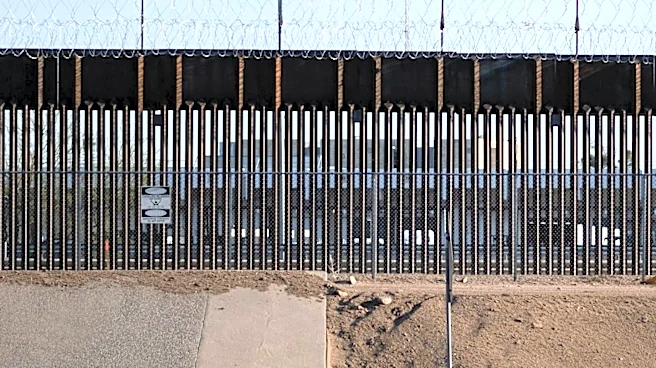
President Trump delivered remarks at the Nassau County Police Academy in Garden City, New York, on August 14, 2026. During his speech, he celebrated what he described as significant reductions in violent crime, strengthened support for law enforcement,
and restored border security under his administration. He highlighted partnerships with local leaders, specifically mentioning Nassau County Executive Bruce Blakeman, and criticized policies such as sanctuary cities and no-cash bail. President Trump also outlined various economic and national security achievements, including record investments in the country and a strong military. He pledged to continue efforts to make America safer and stronger, emphasizing his administration's commitment to law and order and backing for police. He also introduced his new Attorney General, Todd Blanche, and FBI Director Kash Patel, praising their work in achieving these results. The President also touched upon foreign policy, specifically regarding Iran and Venezuela, and criticized New York Governor Kathy Hochul and Attorney General Letitia James.
Why It's Important?
President Trump's address is important as it outlines key policy priorities and achievements that resonate with a significant portion of the U.S. electorate, particularly those concerned with public safety, border control, and economic stability. His emphasis on crime reduction, including claims of the largest drop in murder rates and violent crime in American history, directly addresses a major concern for many citizens. The criticism of sanctuary cities and no-cash bail laws highlights a contentious debate in U.S. politics regarding criminal justice reform and immigration enforcement, with potential implications for state and local governance. Furthermore, his discussion of economic growth, tariffs, and job creation speaks to national economic policy and its impact on industries and employment. The speech also serves as a platform to rally support for law enforcement and conservative judicial appointments, influencing future policy directions and political discourse. The strong stance on foreign policy, particularly regarding Iran, underscores a continued focus on national security and global influence.
What's Next?
Following President Trump's remarks, the focus will likely remain on the implementation and impact of the policies he championed. Continued efforts to reduce crime rates and strengthen border security will be closely watched, with potential legislative actions or executive orders aimed at further restricting sanctuary city policies and reforming bail laws. The administration's economic strategies, including the use of tariffs to encourage domestic investment and manufacturing, will continue to shape U.S. trade relations and industrial growth. Politically, the speech sets the stage for ongoing debates and potential electoral campaigns, particularly in states like New York, where Governor Kathy Hochul and Attorney General Letitia James were directly criticized. The emphasis on 'common sense' governance and 'backing the blue' will likely be central themes in future political messaging, influencing voter sentiment and candidate platforms. The administration's foreign policy stance, especially concerning Iran, suggests a continued assertive approach to international relations and national security.
Beyond the Headlines
The speech delves into deeper societal and political currents beyond immediate policy outcomes. President Trump's strong rhetoric against 'radical left' ideologies, labeling them as 'communists' and attributing societal decay to their policies, reflects a broader cultural and ideological polarization within the U.S. This framing of political opponents as existential threats can further entrench divisions and impact civil discourse. The critique of sanctuary cities and no-cash bail laws touches upon fundamental questions of justice, compassion, and the role of government in protecting its citizens versus upholding individual liberties. The discussion of retail theft and its impact on businesses highlights the challenges faced by urban centers and the ongoing debate about the balance between law enforcement and social welfare. Furthermore, the emphasis on 'America First' and the assertion of U.S. global dominance, while appealing to a nationalist sentiment, also raises questions about international cooperation and the country's role in a multilateral world order. The speech also subtly reinforces a narrative of a 'golden age' under his leadership, aiming to shape public perception of historical progress and future aspirations.