






What's Happening?
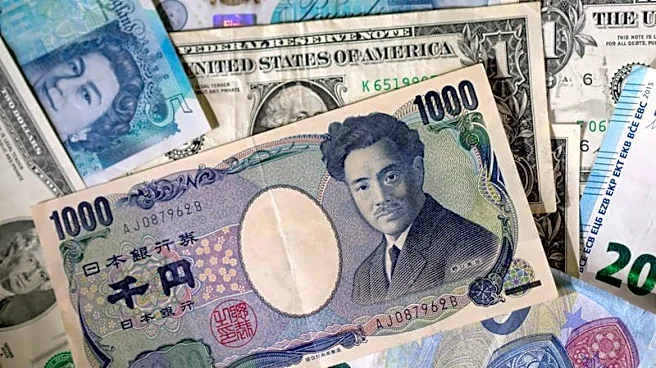
Japan's recent intervention in the foreign exchange market has led to a significant recovery of the yen against the U.S. dollar, erasing losses incurred since the onset of the U.S.-Iran conflict. The intervention involved Japanese officials purchasing
the yen to counteract its depreciation, which had reached a one-year low. This move is part of Japan's broader strategy to stabilize its economy amid rising oil prices and economic uncertainty due to the conflict in the Middle East. The yen's recovery is seen as a temporary relief, with further interventions anticipated if the currency faces renewed pressure.
Why It's Important?
The intervention underscores the challenges faced by Japan as it navigates economic pressures from the ongoing conflict in the Middle East. A weaker yen, while beneficial for exports, poses risks by increasing import costs, particularly for oil, which Japan heavily relies on. The situation highlights the broader implications of geopolitical tensions on global markets and the delicate balance central banks must maintain to address inflation and economic stability. The intervention also reflects Japan's proactive approach to managing its currency and economic policy amid external pressures.
What's Next?
Further interventions by Japanese authorities are likely if the yen continues to face downward pressure. The ongoing conflict in the Middle East and its impact on oil prices will remain a critical factor influencing Japan's economic outlook. Additionally, global markets will closely watch central bank policies and economic indicators to assess potential shifts in monetary policy. The situation remains fluid, with potential implications for global trade and economic stability.