






What's Happening?
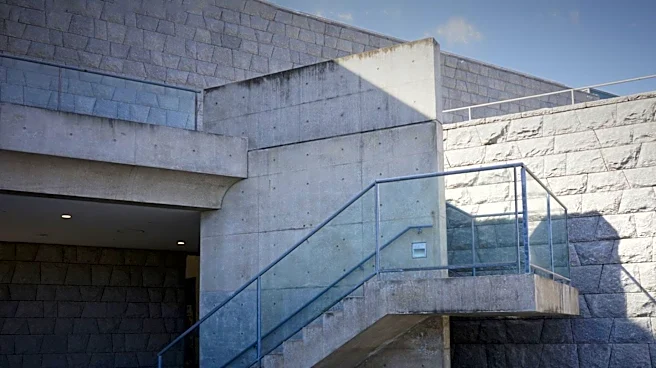
Tengbom has completed the renovation of Campus Tensta, transforming the former Tensta Upper Secondary School in Sweden into a contemporary multi-tenant educational campus. Originally designed by Gösta Uddén in the 1980s, the building is recognized for its
cultural significance, characterized by spatial openness, a winter garden, robust material palette, and strong architectural identity. The renovation project focused on careful intervention to adapt the complex to current technical, environmental, and educational requirements while preserving its original design elements. The project demonstrates a commitment to sensitive reuse, aiming to extend the lifespan of important public architecture, reduce environmental impact, and maintain long-term cultural value. The design team, including Josefin Larsson and Therese Gradin, collaborated with acoustic engineering by Claes Reichmann to ensure the updated campus meets modern standards.
Why It's Important?
This renovation project offers a significant model for the U.S. in addressing the challenges of aging public infrastructure, particularly educational facilities. Many schools and public buildings across the U.S. are decades old and require substantial upgrades to meet contemporary standards for energy efficiency, accessibility, and educational technology. Campus Tensta's approach of 'sensitive reuse' demonstrates that it is possible to modernize facilities without resorting to complete demolition and new construction, which can be more costly and environmentally impactful. This strategy can save taxpayer money, preserve architectural heritage, and reduce the carbon footprint associated with new builds. For U.S. communities, adopting similar renovation philosophies could lead to more sustainable development practices, foster a sense of continuity with local history, and provide students with updated learning environments that are both functional and aesthetically rich.
What's Next?
The success of the Campus Tensta renovation could influence future public sector projects in the U.S., particularly in urban planning and educational infrastructure development. Architects and urban planners may increasingly advocate for adaptive reuse strategies for public buildings, emphasizing the long-term cultural and environmental benefits. This could lead to new policies and funding mechanisms at federal, state, and local levels to support the renovation and modernization of existing structures. Educational institutions might also explore similar approaches to upgrade their facilities, seeking to balance historical preservation with the need for modern learning environments. The project's focus on environmental impact reduction could also spur greater adoption of sustainable building practices and materials in U.S. renovation projects, contributing to broader climate goals.
Beyond the Headlines
Beyond the immediate benefits of a modernized educational facility, the Campus Tensta renovation highlights a deeper philosophical shift towards valuing and extending the life of existing architecture. In a society often driven by new construction, this project champions the idea that buildings can evolve and adapt over time, carrying their history forward. This approach has ethical implications, as it promotes responsible resource management and reduces the waste associated with a 'build-and-demolish' cycle. Culturally, preserving and updating significant public buildings helps maintain a community's identity and collective memory, fostering a sense of place and continuity. It also encourages a more nuanced understanding of architectural design, where the challenge lies not just in creating new forms but in thoughtfully integrating the old with the new, ensuring that structures remain relevant and functional for future generations.