







What's Happening?
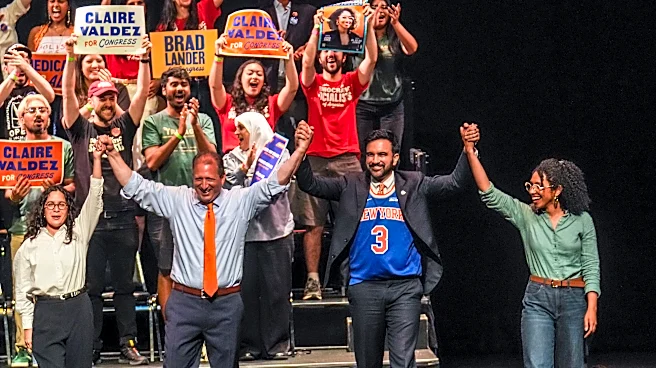
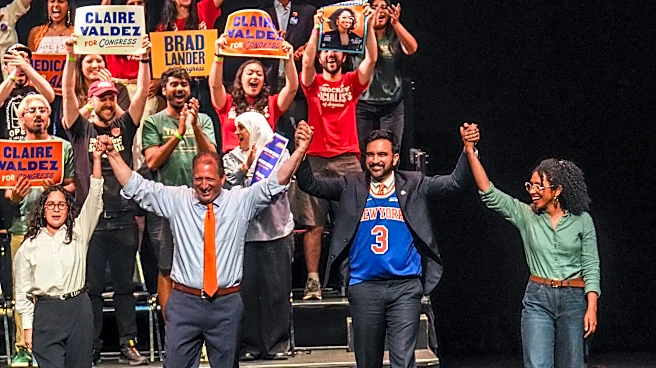
Rep. Adriano Espaillat is facing a primary challenge from Darializa Avila Chevalier in New York's 13th Congressional District. Chevalier, a Democratic Socialist, has drawn criticism for her refusal to condemn Hamas and its attacks on Israel, leading to a lack
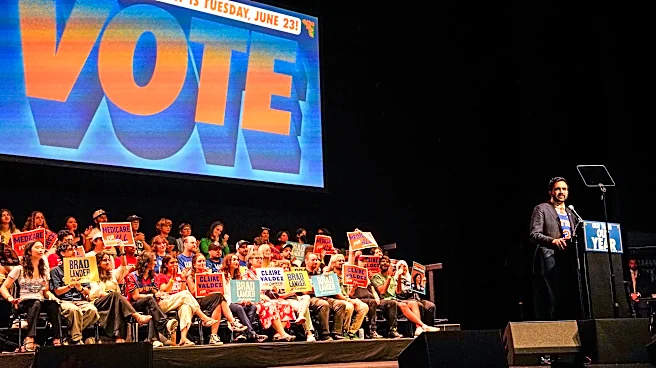
of endorsement from the Broadway Democrats, a left-wing political club in Manhattan. The group has instead chosen to endorse Espaillat, despite acknowledging the difficulty of the decision. Chevalier's stance has sparked controversy within the Democratic Party, particularly due to her participation in anti-Israel protests and her comments on Zionism. The primary election is set for June 23, and the outcome could influence the political dynamics within the district.
Why It's Important?
The primary race between Espaillat and Chevalier highlights the ongoing tensions within the Democratic Party regarding foreign policy, particularly in relation to Israel and Palestine. Chevalier's refusal to condemn Hamas has brought attention to the broader debate over U.S. support for Israel and the treatment of Palestinians. This race could impact the party's stance on these issues and influence future policy decisions. Additionally, the outcome may affect the party's unity and electoral strategy in a district that is heavily Democratic. The race also underscores the influence of progressive and socialist movements within the party, as well as the challenges they face in gaining broader acceptance.
What's Next?
The primary election on June 23 will determine the Democratic nominee for New York's 13th Congressional District. If Chevalier wins, it could signal a shift towards more progressive policies within the district and potentially influence the national conversation on U.S. foreign policy. Espaillat's victory, on the other hand, may reinforce more traditional Democratic positions. The race is likely to draw significant attention from political analysts and could serve as a bellwether for future Democratic primaries. The response from major stakeholders, including political leaders and advocacy groups, will be crucial in shaping the post-election landscape.