



What's Happening?
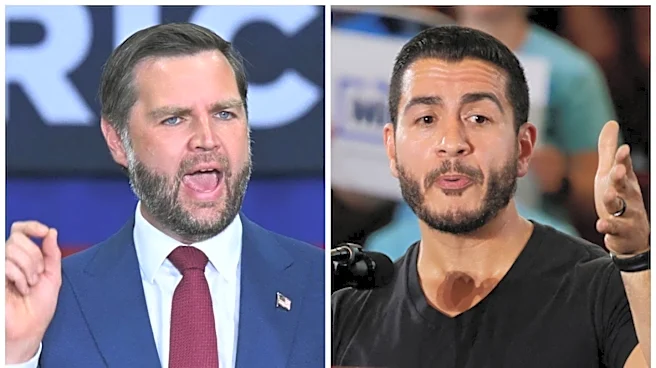
Vice President J.D. Vance is campaigning in Michigan, a key battleground state, ahead of the November midterm elections. He is scheduled to speak at a campaign-style event hosted by President Trump's MAGA Inc. super political action committee in Sterling
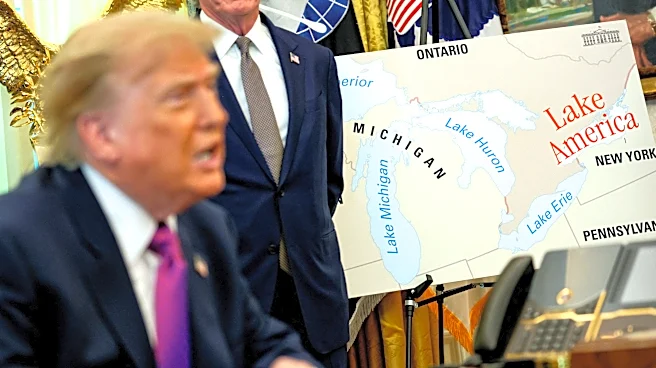
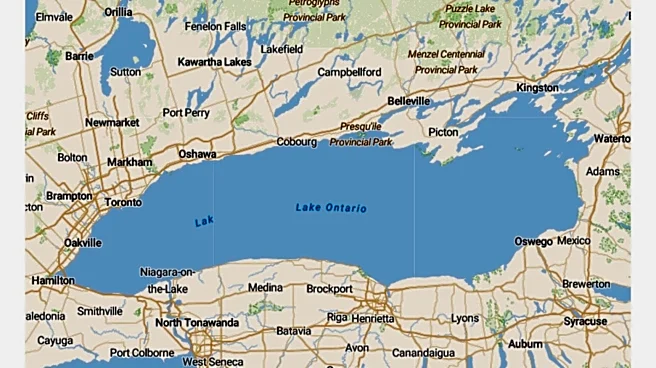
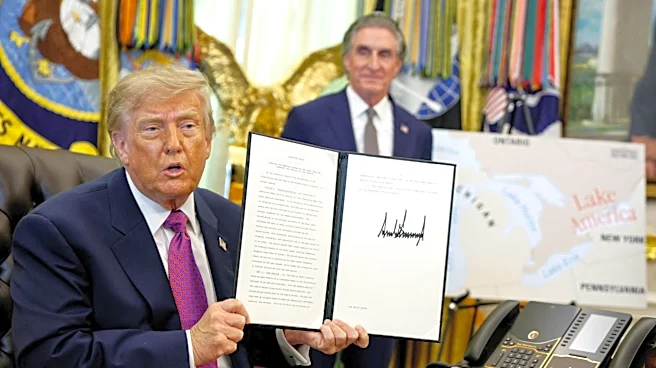
Heights. Vance's visit includes appearances with 10th District GOP congressional hopeful Mike Bouchard, U.S. Senate candidate Mike Rogers, and U.S. Rep. John James, the Republican nominee for governor. This trip occurs amidst heightened trade tensions between the Trump administration and Canada, Michigan's northern neighbor. President Trump recently signed an order to rename Lake Ontario to Lake America and criticized opponents of AI data centers on social media. Michigan Democrats, including former Governor Jim Blanchard and gubernatorial hopeful Jocelyn Benson, have criticized Trump’s trade war with Canada, with the United Auto Workers union expressing concerns about its recklessness. The Michigan Smart Trade Alliance has also released an ad warning about the negative impacts of fluctuating tariff policies on the auto industry.
Why It's Important?
Vice President Vance's campaign stop in Michigan underscores the state's critical role in the upcoming midterm elections, particularly given the open seats for governor and a U.S. Senate position. The visit highlights the Republican party's strategy to mobilize support in a state that has historically swung between parties. The ongoing trade tensions with Canada, a significant trading partner for Michigan, are a central issue, directly impacting the state's vital automotive industry. The criticism from Democrats and business groups regarding Trump's tariff policies suggests that trade will be a contentious point in the election, potentially influencing voter sentiment. The debate over trade policies, particularly concerning the United States-Mexico-Canada Agreement (USMCA), could determine the economic stability of Michigan's manufacturing sector and the livelihoods of its workers. The presence of high-profile Republican figures alongside local candidates aims to consolidate the party's base and project a unified front.
What's Next?
As the November midterm elections draw closer, Michigan is expected to remain a focal point for both Republican and Democratic campaigns. Vice President Vance's visit is likely to be followed by further campaign events from both parties, intensifying the political discourse around key issues such as trade, the economy, and local governance. The criticisms from Democrats and business groups regarding trade policies suggest that these issues will continue to be debated, potentially leading to more public statements and policy proposals from candidates. The Michigan Smart Trade Alliance's advocacy for consistent trade policy and the extension of the USMCA indicates that the automotive industry will continue to press for stability in trade relations. The outcomes of these elections will not only determine the political landscape of Michigan but could also influence the balance of power in the U.S. Congress and the future direction of national trade policies.
Beyond the Headlines
The political dynamics in Michigan extend beyond immediate election outcomes, touching upon the broader implications of national trade policies on local economies and the evolving relationship between the U.S. and its closest trading partners. The debate over tariffs and trade agreements like the USMCA highlights the delicate balance between protecting domestic industries and maintaining robust international trade relationships. The concerns raised by the United Auto Workers and the Michigan Smart Trade Alliance reflect a deeper anxiety within the manufacturing sector about economic uncertainty and the potential for job losses due to unpredictable trade policies. Furthermore, the political rhetoric surrounding issues like AI data centers and the renaming of Lake Ontario suggests a broader trend of nationalistic sentiment influencing policy decisions, which could have long-term effects on environmental policy, technological development, and international relations. The election in Michigan will serve as a barometer for how these national issues resonate with voters in a state heavily reliant on global trade and manufacturing.