







What's Happening?
Ocean water temperatures in Monterey Bay have reached historic highs, marking the warmest observed in over 30 years, according to the Monterey Bay Aquarium Research Institute (MBARI). This warming is attributed to the arrival of El Niño, specifically
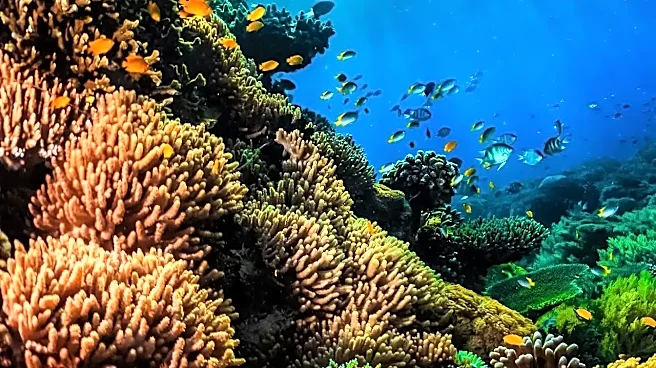
through Kelvin waves that deliver warm water across the Pacific. On October 26, the temperature hit 18.18 degrees Celsius (approximately 64 degrees Fahrenheit), surpassing a record set in November 1997 during a previous El Niño event. Senior scientist Francisco Chavez of MBARI noted that this El Niño is forecasted to be one of the strongest on modern record. The warming disrupts the ocean's nutrient-rich upwelling, heats coastal waters, raises sea levels, and stresses marine life, with scientists observing tropical species rarely seen in Central California waters.
Why It's Important?
The unprecedented ocean warming in Monterey Bay due to El Niño carries significant ecological and economic implications for the U.S. West Coast. The disruption of nutrient-rich upwelling directly impacts the marine food web, potentially leading to less food for whales, seabirds, and other species, which could have cascading effects on local ecosystems. The presence of tropical species, while interesting, indicates a shift in habitat suitability that could displace native species and alter biodiversity. For industries like fishing and tourism, these ecological changes could result in economic losses. The stress on kelp forests, vital marine habitats, further exacerbates the environmental impact. This situation highlights the vulnerability of coastal ecosystems to climate phenomena and the need for continuous monitoring and conservation efforts.
What's Next?
Scientists anticipate that the strongest impacts of this El Niño on Monterey Bay will occur during the winter and spring months, with warm water potentially persisting for six or more months. Researchers are closely monitoring daily temperatures and ecological observations to understand the full extent of the changes. The influx of warm-water species and the stress on local marine life, including kelp forests, are expected to continue. The National Oceanic and Atmospheric Administration's (NOAA) Climate Prediction Center has indicated an 83% chance of this year's El Niño becoming 'historic' during this period. This ongoing situation will require sustained scientific research to track the long-term effects on the marine environment and inform potential mitigation strategies.
Beyond the Headlines
The record-breaking ocean temperatures in Monterey Bay underscore a broader trend of climate-induced changes in marine environments. The observation of tropical species migrating northward serves as a stark indicator of shifting ocean conditions and the potential for significant alterations to established ecosystems. This phenomenon raises questions about the long-term adaptability of marine life and the resilience of coastal habitats. Beyond immediate ecological impacts, such shifts can have profound cultural and economic consequences for communities reliant on marine resources. The event highlights the interconnectedness of global climate patterns and local environmental health, emphasizing the urgent need for comprehensive climate action and marine conservation strategies to protect vulnerable ecosystems.