
What's Happening?
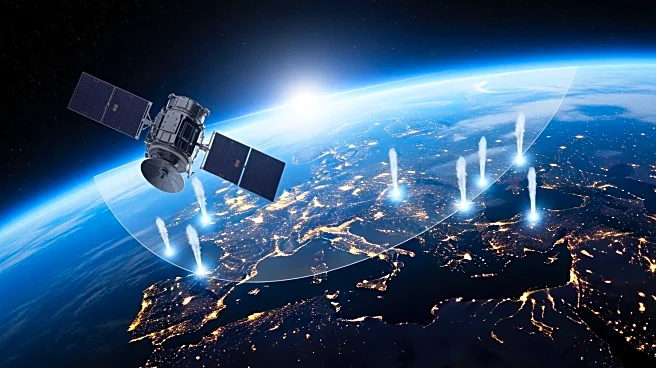
Private satellites operated by GHGSat have provided a detailed global view of methane emissions from oil, gas, and coal facilities. The data, collected using high-resolution observations, identified significant
methane emissions from over 3,000 facilities worldwide, with the largest emissions detected in countries like the U.S., Turkmenistan, Russia, Mexico, and Kazakhstan. Methane, a potent greenhouse gas, is the second-largest contributor to human-caused global warming. The GHGSat satellite constellation offers a facility-level perspective, bridging the gap between traditional bottom-up inventories and top-down atmospheric measurements. This advancement allows for more precise identification of emission sources, which is crucial for directing mitigation efforts.
Why It's Important?
The identification of methane emissions at the facility level is critical for addressing climate change, as methane is a significant contributor to global warming. By pinpointing specific sources, stakeholders can implement targeted strategies to reduce emissions. This development is particularly relevant for the energy sector, which is a major emitter of methane. The data provided by GHGSat can enhance understanding and predictions of methane emissions, aiding in the formulation of effective environmental policies. This could lead to stricter regulations and innovations in emission reduction technologies, impacting industries and governments worldwide.
What's Next?
GHGSat plans to expand its satellite constellation to improve spatial and temporal coverage, allowing for more frequent and detailed monitoring of methane emissions. This expansion will enable better detection and tracking of emissions, facilitating more effective mitigation strategies. As the data becomes more comprehensive, it is expected that governments and industries will face increased pressure to address methane emissions. This could lead to new regulations and initiatives aimed at reducing the environmental impact of the energy sector.