





What's Happening?
A resident of Roscommon County, Michigan, has contracted Eastern Equine Encephalitis (EEE), marking the first human case of the dangerous mosquito-borne virus in the state since 2021. The Michigan Department of Health and Human Services (MDHHS) reported
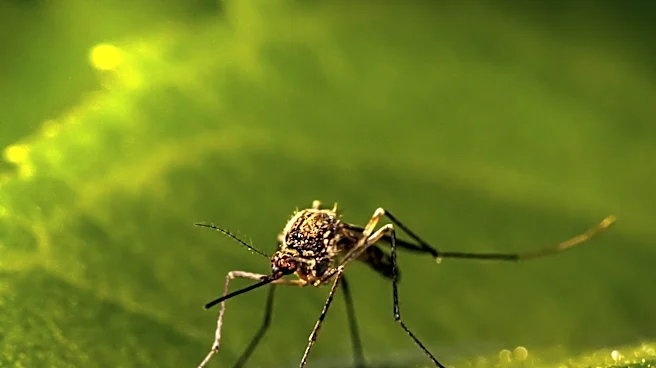
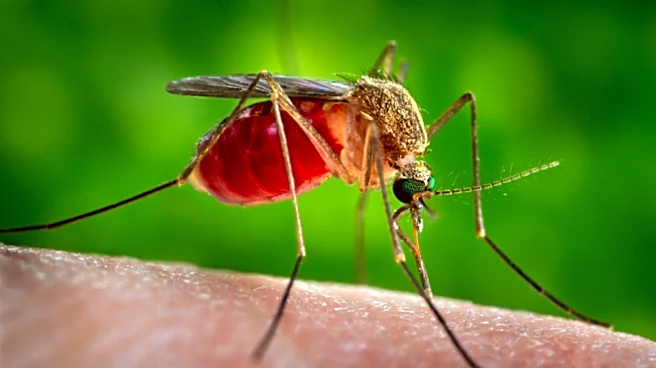
the case on August 19, emphasizing the severity of EEE, which can cause serious illness and has a fatality rate of 30% among infected individuals. EEE is transmitted to humans and horses through the bite of infected mosquitoes. State health officials are actively trapping and testing mosquitoes in Roscommon County to assess the risk level and are urging residents to take precautions to avoid mosquito bites. Other mosquito-borne viruses, including West Nile virus and Jamestown Canyon virus, have also been detected in Michigan mosquitoes this year.
Why It's Important?
This confirmed human case of EEE is significant due to the high fatality rate and potential for severe neurological damage in survivors, including permanent brain damage, personality disorders, seizures, and paralysis. The re-emergence of EEE in Michigan highlights an ongoing public health threat, particularly for individuals living in or near woodlands, and those who spend considerable time outdoors. The MDHHS's response, including surveillance and public advisories, is critical for preventing further infections and mitigating the spread of the virus. The presence of other arboviruses like West Nile and Jamestown Canyon viruses further complicates the public health landscape, necessitating comprehensive mosquito control and public awareness campaigns to protect vulnerable populations. The economic impact could include healthcare costs for treatment and prevention efforts, as well as potential disruptions to outdoor recreational activities.
What's Next?
Michigan health officials will continue their surveillance efforts, including trapping and testing mosquitoes, and monitoring for EEE activity in humans, domestic animals, and wildlife across the state. Residents are strongly advised to implement personal protective measures, such as using EPA-registered insect repellents, wearing long-sleeved shirts and pants outdoors, and eliminating standing water around their homes to reduce mosquito breeding sites. The MDHHS will likely issue further public health alerts and guidance as the situation evolves, especially if more cases are identified or if the risk level changes. Collaboration between state and local health departments, along with the Michigan Department of Agriculture and Rural Development and the Michigan Department of Natural Resources, will be crucial in coordinating a comprehensive response to this public health concern.
Beyond the Headlines
The re-emergence of EEE underscores the broader challenge of vector-borne diseases, which are increasingly influenced by environmental factors such as climate change and habitat alterations. Changes in weather patterns can affect mosquito populations and their geographic distribution, potentially leading to more frequent or widespread outbreaks. This situation also highlights the importance of robust public health infrastructure, including surveillance systems and rapid response capabilities, to detect and manage such threats effectively. Ethically, there is a responsibility to ensure equitable access to information and protective measures for all communities, especially those in high-risk areas. Long-term, this event could prompt increased investment in research for EEE treatments and vaccines, as well as more sustainable and environmentally friendly mosquito control strategies to protect public health in the face of evolving ecological challenges.