





What's Happening?
A significant portion of the roof at a BJ's Wholesale Club in Ocean Township, New Jersey, collapsed on July 6 due to the accumulation of rainwater. This incident led to an emergency evacuation of the premises. The collapse occurred during severe weather
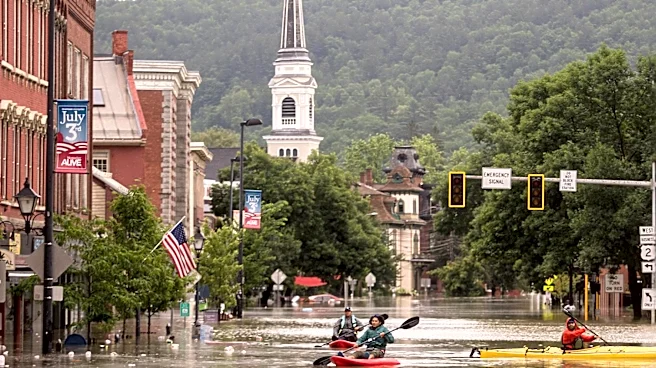
conditions that affected the Northeast, including New York and New Jersey, causing flash flooding and structural damage. Despite the damage, no injuries were reported. The heavy rainfall also resulted in flooded streets and submerged vehicles in New Jersey, with some areas experiencing significant flooding. A hospital at the Jersey Shore was also affected by flooding, although patient care operations continued without disruption.
Why It's Important?
The roof collapse at BJ's Wholesale Club highlights the vulnerability of infrastructure to extreme weather events, which are becoming more frequent due to climate change. This incident underscores the need for businesses and public facilities to assess and reinforce their structures to withstand severe weather conditions. The flooding and structural damage across New Jersey and New York also emphasize the importance of emergency preparedness and response systems to protect public safety and minimize disruptions. The economic impact on businesses and communities affected by such weather events can be significant, with potential losses in revenue and increased repair costs.
What's Next?
In the aftermath of the roof collapse and widespread flooding, local authorities and businesses are likely to conduct assessments to determine the extent of the damage and necessary repairs. There may be increased scrutiny on building codes and regulations to ensure structures can withstand extreme weather conditions. Additionally, emergency services and local governments may review and update their response plans to better handle future incidents. The event could also prompt discussions on climate resilience and infrastructure investment to mitigate the impact of severe weather.