



What's Happening?
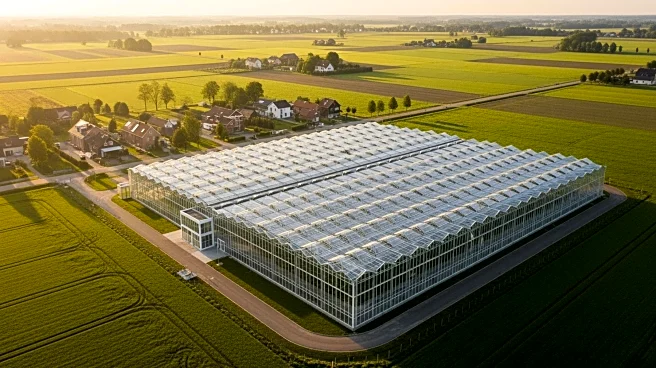
Leamington, Ontario, known as the 'greenhouse capital of North America,' has seen significant growth in its greenhouse industry over the past decade. Satellite imagery from NASA's Landsat 8 shows an increase in greenhouse coverage, with facilities now occupying
nearly 8 square kilometers. These greenhouses primarily produce vegetables like tomatoes and cucumbers, as well as other crops such as strawberries and cannabis. The expansion has altered the local landscape and increased light pollution, affecting nearby ecological areas like Point Pelee, a critical stopover for migratory birds and monarch butterflies.
Why It's Important?
The growth of the greenhouse industry in Leamington highlights the economic benefits of agricultural innovation, providing fresh produce year-round and supporting local economies. However, the environmental impact, particularly light pollution, poses challenges for local wildlife and ecosystems. The situation underscores the need for balancing economic development with environmental conservation. Measures such as the 2022 bylaw requiring light-blocking curtains in greenhouses demonstrate efforts to mitigate these impacts, setting a precedent for sustainable agricultural practices.
What's Next?
Continued monitoring and regulation will be essential to manage the environmental impacts of greenhouse operations. Researchers and policymakers may explore additional strategies to reduce light pollution and protect local ecosystems. The success of these measures could influence agricultural practices in other regions, promoting a more sustainable approach to greenhouse farming.