







What's Happening?
Ethiopia is promoting its rich historical and natural attractions to travelers, focusing on its unique cultural heritage as the only African nation never colonized. Key historical sites include the 12th-century rock-hewn churches of Lalibela, a UNESCO
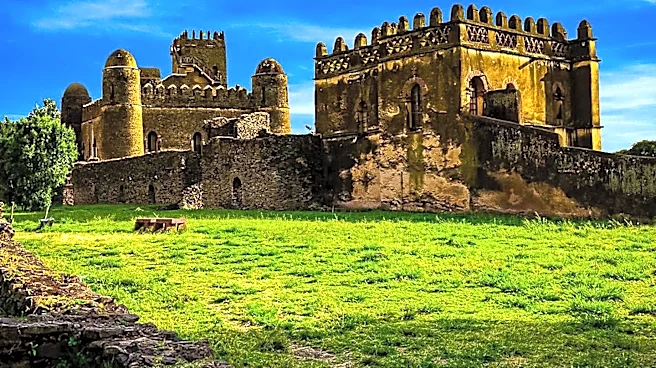
World Heritage Site and a living place of pilgrimage. The ancient capital of Axum, home to towering granite stelae and traditionally believed to house the Ark of the Covenant, is another significant destination. The royal city of Gondar, with its 17th-century castles, and the island monasteries of Lake Tana, adorned with vivid religious paintings, are also central to Ethiopia's tourism offerings. Natural attractions include the Simien Mountains, a UNESCO-listed site known for its jagged peaks and endemic wildlife like gelada baboons and Walia ibex. The Danakil Depression, one of the hottest and lowest places on Earth, features lava lakes and neon sulfur springs, offering an otherworldly landscape. The Blue Nile Falls and the Bale Mountains National Park, with its Afro-alpine moorland and rare Ethiopian wolf, complete the diverse natural appeal.
Why It's Important?
Ethiopia's emphasis on its historical and natural wonders for tourism is crucial for its economic development and international standing. By showcasing its unique culture, ancient civilizations, and diverse landscapes, Ethiopia aims to attract a global audience, thereby boosting its tourism sector. This can lead to significant economic benefits, including job creation in hospitality, guiding, and related services, as well as increased foreign exchange earnings. The preservation and promotion of UNESCO World Heritage Sites like Lalibela and Axum also underscore Ethiopia's commitment to cultural heritage, which can foster national pride and attract further international support for conservation efforts. Furthermore, a thriving tourism industry can help diversify Ethiopia's economy, reducing its reliance on agriculture and other sectors, and providing a more stable economic foundation. The unique status of Ethiopia as an uncolonized nation also adds a compelling narrative for visitors interested in African history and resilience.
What's Next?
Ethiopia's tourism strategy involves developing tailor-made tours that efficiently link its historic sites, often utilizing internal flights. These tours are built around key destinations like Lalibela, Gondar, Axum, the Simien Mountains, and the Danakil Depression, with local guides, permits, and hotels pre-arranged. The focus will likely remain on enhancing visitor infrastructure and services to accommodate a growing number of tourists. Continued efforts in marketing and promotion will be essential to highlight Ethiopia's unique offerings and attract a broader international audience. There may also be further development of eco-tourism initiatives, particularly in natural parks like the Simien Mountains and Bale Mountains, to ensure sustainable tourism practices that protect the environment and benefit local communities. The ongoing success of these initiatives will depend on maintaining political stability and ensuring a safe and welcoming environment for travelers.
Beyond the Headlines
Beyond the immediate economic gains, Ethiopia's tourism drive has profound cultural and geopolitical implications. By inviting the world to experience its ancient Christian heritage, unique calendar, and alphabet, Ethiopia reinforces its distinct identity on the global stage. This cultural diplomacy can foster greater understanding and appreciation of African history, challenging Eurocentric narratives and highlighting the continent's rich contributions to civilization. The preservation of sites like Lalibela and Axum is not just about tourism; it's about safeguarding a shared human heritage. However, the influx of tourism also brings challenges, such as the potential for cultural commodification and environmental impact. Balancing economic development with cultural preservation and ecological sustainability will be a critical long-term consideration. The success of Ethiopia's tourism model could also inspire other African nations to leverage their unique historical and natural assets for sustainable development.