





What's Happening?
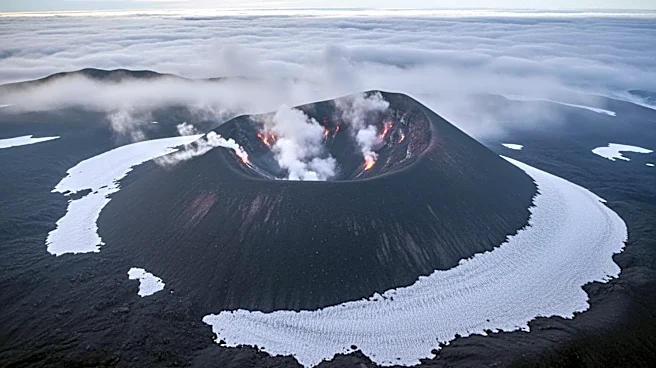
Research from Harvard University has provided new insights into the Sturtian glaciation, a 56-million-year ice age that occurred around 717 million years ago. The study suggests that rather than a continuous freeze, Earth experienced cycles of glaciation and
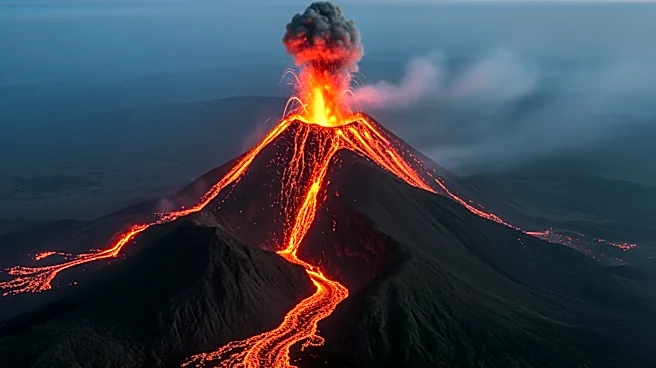
thaw, driven by changes in atmospheric carbon dioxide and volcanic activity. The research focuses on the Franklin Large Igneous Province, where volcanic eruptions released basalt that, through weathering, reduced CO2 levels and triggered glaciation. This cycle of freezing and thawing could explain the prolonged duration of the Sturtian glaciation.
Why It's Important?
The findings challenge traditional models of the Sturtian glaciation and offer a new perspective on Earth's climate history. Understanding these cycles is crucial for interpreting geological records and the survival of life during extreme climate events. The study also has implications for the search for life on exoplanets, suggesting that similar cycles could occur on other planets with active volcanoes and carbon cycles. This research enhances our understanding of planetary climate systems and the potential for life beyond Earth.