







What's Happening?
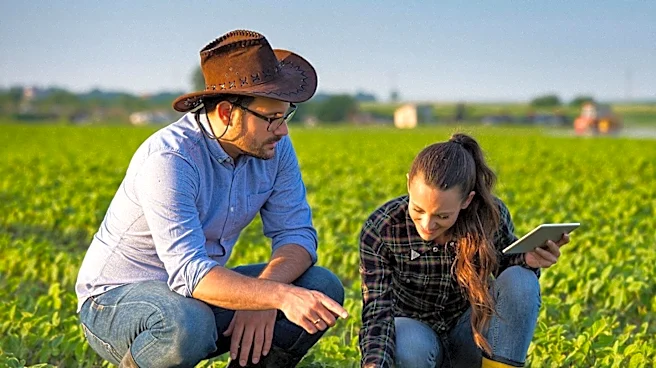
In Heyworth, Illinois, farmers and scientists convened at the Illinois Soybean Association's Agronomy Farm Field Day to discuss innovative agricultural techniques. Connor Sible, a Crop Sciences Assistant Research Professor at the University of Illinois, presented
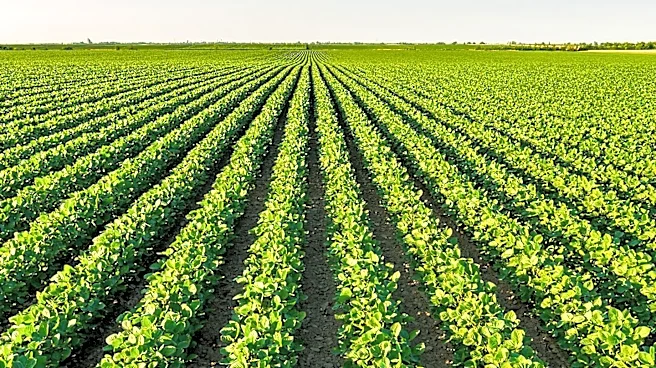
research on tissue tests that allow farmers to send leaf samples to labs to ensure crops receive adequate nutrients. This method could help farmers adjust fertilizer use based on test results. Additionally, the On-Farm Trial Network was highlighted, enabling farmers to host research plots on their land. The network is still analyzing yield results from this year, but last year showed benefits from applying sulfur to soybeans early in the spring. Another focus was on soybean breeding research aimed at developing disease-resistant, high-yield varieties.
Why It's Important?
The introduction of these new agricultural techniques is significant for the farming community in Central Illinois as it offers potential improvements in crop management and yield. By utilizing tissue tests, farmers can optimize fertilizer use, potentially reducing costs and environmental impact. The On-Farm Trial Network provides a collaborative platform for farmers to engage in research, fostering innovation and practical solutions tailored to local conditions. The soybean breeding research could lead to more resilient crops, crucial for maintaining productivity in the face of climate change and disease pressures. These advancements could enhance the economic viability of farms and contribute to sustainable agricultural practices.
What's Next?
Farmers are encouraged to participate in the On-Farm Trial Network and utilize the 'Growing Concerns' survey to influence future research directions. As the growing season progresses, farmers will continue to monitor crop conditions and apply the new techniques discussed at the field day. The results from this year's trials will be analyzed to provide further insights into effective agricultural practices. Continued collaboration between scientists and farmers is expected to drive further innovation and adaptation in the agricultural sector.