








What's Happening?
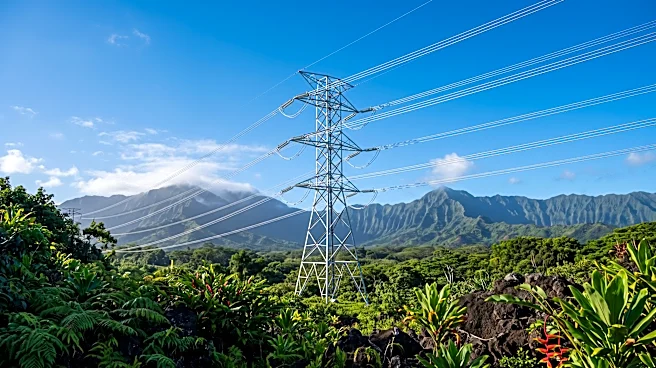
Hawaiian Electric operates an extensive power delivery system across five islands, encompassing over 9,800 miles of transmission and distribution lines. The company's infrastructure is designed with redundancy to enhance reliability, particularly in major
subtransmission systems where multiple circuits serve larger areas. This design allows for electricity to be rerouted through alternate paths if one line is out of service due to maintenance or emergencies. Electricity is transported from power plants via 138,000-volt transmission lines to substations, where the voltage is progressively reduced to 46-kV, then to 12-kV or 4-kV, and finally to 240 or 120 volts for businesses and homes. On Oahu, power generated on the west side is delivered through two primary transmission corridors, one in the north and one in the south, acting as 'highways' to ensure continuous supply even if one corridor faces an emergency. Hawaiian Electric also maintains 24-hour trouble crews to restore service safely and efficiently, and approximately 43% of its lines are underground, representing a significant investment in infrastructure for reliability and aesthetic reasons.
Why It's Important?
Hawaiian Electric's detailed explanation of its power delivery system and redundancy measures is crucial for understanding the resilience and operational complexities of modern electrical grids, especially in geographically isolated and environmentally sensitive regions like Hawaii. The emphasis on redundancy, with multiple circuits and transmission corridors, directly addresses the need for reliable power supply, minimizing the impact of outages caused by maintenance or unforeseen events. The significant investment in undergrounding nearly half of its power lines highlights a proactive approach to both reliability and environmental aesthetics, reducing vulnerability to weather-related damage and visual pollution. This comprehensive strategy is vital for supporting the daily lives of residents and the economic stability of the islands, ensuring that essential services and businesses have consistent access to electricity, which is fundamental for public safety and economic activity.
What's Next?
Hawaiian Electric will likely continue its ongoing efforts to maintain and upgrade its extensive power delivery infrastructure, including further investments in redundancy and undergrounding projects to enhance grid resilience. The company's 24-hour trouble crews will remain active, ensuring prompt response to any service interruptions. Future developments may include the integration of new technologies to further optimize power delivery, improve grid stability, and potentially incorporate more renewable energy sources into the existing network. Public engagement and communication regarding power quality, safety, and emergency preparedness will also remain a key focus, especially given the unique challenges posed by Hawaii's geography and climate. The company's commitment to continuous improvement in its power delivery system will be essential for meeting the evolving energy demands and environmental considerations of the islands.
Beyond the Headlines
Hawaiian Electric's robust power delivery system and its commitment to redundancy and undergrounding reflect a broader trend in utility management towards creating more resilient and sustainable energy infrastructures. The high percentage of underground lines not only protects against weather-related damage but also contributes to the natural beauty of the islands, aligning with community values. This approach can serve as a model for other regions facing similar challenges, such as extreme weather events or the need to preserve scenic landscapes. Furthermore, the intricate network of transmission and distribution lines, coupled with 24-hour response teams, underscores the critical role of human expertise and continuous operational vigilance in maintaining essential services. This detailed insight into Hawaiian Electric's operations highlights the complex engineering and strategic planning required to deliver reliable power in a challenging environment, influencing discussions on infrastructure investment and climate adaptation strategies nationwide.