


What's Happening?
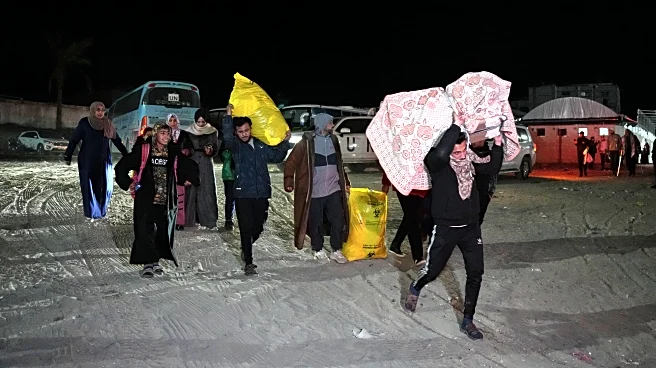
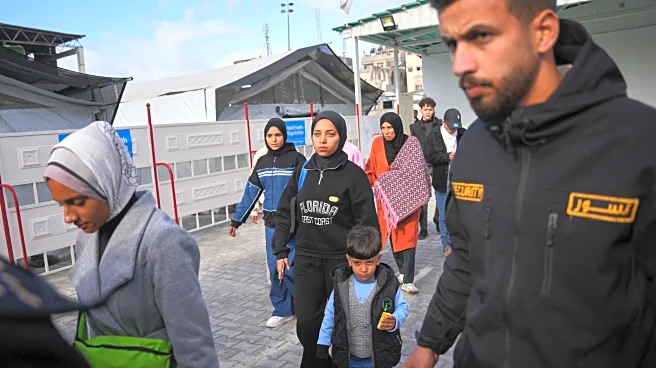
Gaza is currently experiencing severe winter conditions, leading to a humanitarian crisis as dozens of people, including infants, have died from hypothermia or the collapse of war-damaged homes. The Health Ministry of the Hamas-run government in Gaza has
reported these fatalities, highlighting the dire need for more shelters and humanitarian aid. Despite a mostly held ceasefire, progress has slowed, with significant challenges remaining. These include the deployment of an international stabilization force, the establishment of a technocratic governing body for Gaza, the disarmament of Hamas, and further Israeli troop withdrawals. Both Israel and Hamas have accused each other of violating the truce, complicating the situation further.
Why It's Important?
The ongoing humanitarian crisis in Gaza underscores the urgent need for international intervention and aid. The severe winter conditions exacerbate the already dire living conditions for displaced families, many of whom are living in makeshift tents. The slow progress in ceasefire talks and the accusations of truce violations between Israel and Hamas highlight the fragile nature of the current peace efforts. The situation has significant implications for regional stability and the humanitarian situation in Gaza, affecting thousands of civilians who are in desperate need of assistance.
What's Next?
The next steps involve addressing the humanitarian needs of the displaced population in Gaza and ensuring the delivery of aid. International stakeholders may need to increase pressure on both Israel and Hamas to adhere to the ceasefire terms and facilitate the deployment of a stabilization force. The establishment of a governing body for Gaza and the disarmament of Hamas are critical to achieving long-term peace and stability in the region. Continued dialogue and negotiation will be essential to overcoming the current impasse and preventing further humanitarian disasters.