






What's Happening?
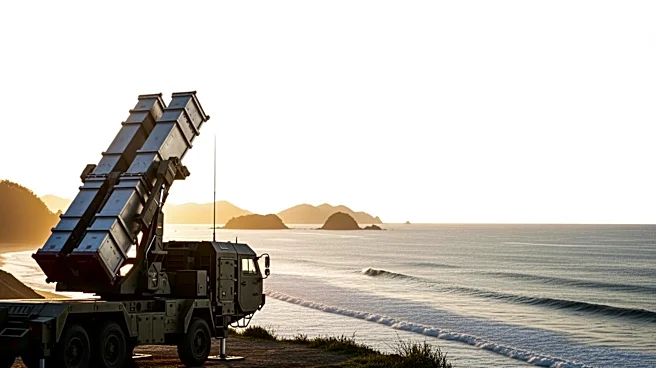
Japan has successfully conducted a missile exercise in the Philippines as part of the Balikatan 2026 military drills. The exercise involved the firing of two Type 88 anti-ship missiles by the Japan Ground Self-Defense Force at a decommissioned ship, the ex-Philippine
Navy vessel BRP Quezon. The event took place on May 6, 2026, at Culili Point sand dunes in northwestern Luzon. This exercise is part of a broader effort to enhance military cooperation among participating countries, including the United States, Canada, and the Philippines. The aim is to simulate defense strategies against potential threats in the region, particularly focusing on containing Chinese military forces within the First Island Chain.
Why It's Important?
The exercise underscores the strategic importance of the Luzon Strait as a maritime chokepoint and highlights the collaborative defense efforts among allied nations in the Asia-Pacific region. By involving multiple countries, the exercise aims to strengthen regional security and deter potential aggression, particularly from China. The participation of Japanese combat troops in the Philippines for the first time since World War II marks a significant shift in Japan's defense policy, reflecting its growing role in regional security. This development could influence future military collaborations and defense strategies in the region.
What's Next?
The successful execution of the missile exercise may lead to further military collaborations and joint exercises among the participating nations. It could also prompt discussions on enhancing defense capabilities and strategies to address regional security challenges. The exercise may influence future defense policies and agreements, particularly in response to China's military activities in the region. Additionally, the event could pave the way for increased military presence and cooperation among allied nations in the Asia-Pacific.