






What's Happening?
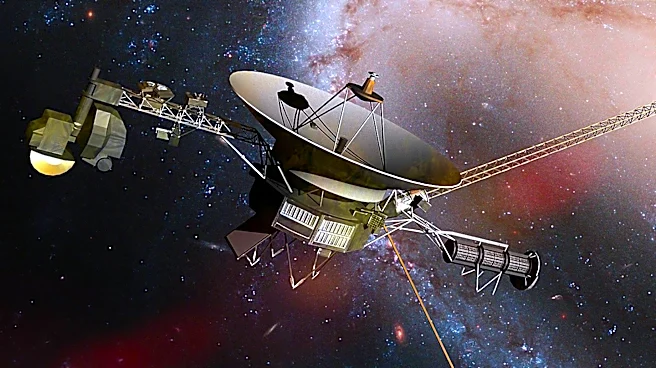
A reanalysis of Voyager 2's 1986 flyby of Uranus suggests the spacecraft may have captured the planet during a rare atmospheric state, occurring only about 4% of the time. The flyby revealed Uranus's extreme magnetosphere, characterized by a depleted
plasma environment and intense radiation belts. Recent studies indicate the flyby occurred during a period of extreme solar wind compression, which may have influenced the observed magnetospheric features. This finding suggests that the data collected may not represent Uranus's typical state, highlighting the need for further exploration.
Why It's Important?
The reanalysis challenges long-held assumptions about Uranus's magnetosphere, emphasizing the limitations of single data points in planetary exploration. Understanding the planet's true atmospheric conditions requires more comprehensive study, potentially through future missions. This insight underscores the importance of continuous observation and data collection to accurately characterize planetary environments, informing future scientific endeavors and mission planning.