



What's Happening?
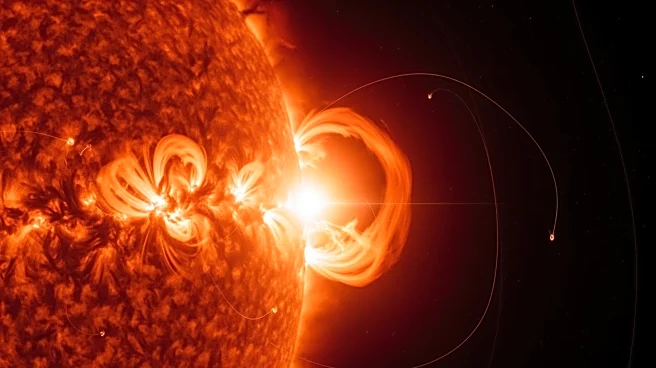
The Sun has emitted a powerful X1-class solar flare, which was captured by NASA's Solar Dynamics Observatory. This solar event resulted in radio blackouts affecting the sunlit portions of Earth at the time, particularly impacting regions in Australia
and parts of Southeast Asia. The flare was observed in multiple wavelengths, showcasing the intensity of the solar activity. Such flares are known to disrupt radio communications and can have significant effects on satellite operations and power grids, depending on their strength and the Earth's position relative to the flare.
Why It's Important?
Solar flares like the recent X1-class event can have substantial implications for global communications and technology infrastructure. Radio blackouts can disrupt aviation, maritime, and emergency services communications, posing challenges for safety and operational efficiency. Additionally, strong solar flares can affect satellite operations, potentially leading to service interruptions for GPS, television, and internet services. The event underscores the importance of monitoring solar activity to mitigate risks associated with space weather, which can have cascading effects on various sectors reliant on technology and communication systems.