





What's Happening?
The United Nations Educational, Scientific and Cultural Organization (UNESCO) recently marked its 80th anniversary by reaffirming the critical role of education, science, and culture in fostering global peace. Established on November 16, 1945, with its constitution
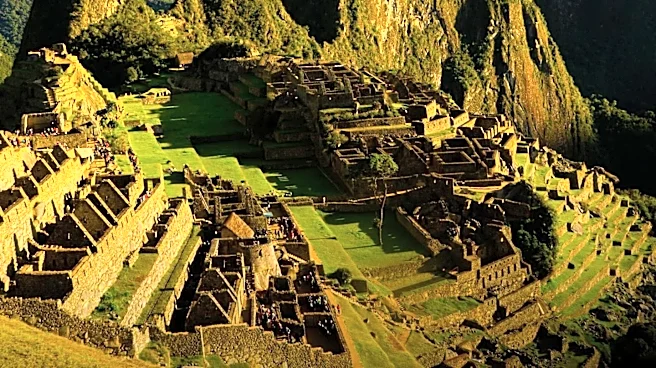
entering into force on November 4, 1946, UNESCO's mission is to strengthen international cooperation across these domains to promote peace and security. The organization, which comprises 194 member states, highlighted its consistent efforts over eight decades to advance peace through knowledge, dialogue, and collaboration among nations. UNESCO also noted its achievements in protecting cultural and natural heritage, advocating for freedom of expression, ensuring quality education, and applying science for the benefit of humanity. The organization stressed that its foundational mission remains as vital today as it was at its inception.
Why It's Important?
UNESCO's continued emphasis on education, science, and culture as cornerstones for peace holds significant importance for global stability and international relations. In an increasingly interconnected yet often fractured world, the organization's work provides a framework for addressing root causes of conflict through intellectual and cultural exchange rather than solely through political or military means. By promoting quality education, UNESCO aims to cultivate critical thinking, tolerance, and mutual understanding, which are essential for preventing extremism and fostering peaceful coexistence. Its efforts in preserving cultural heritage and supporting freedom of expression contribute to a richer global dialogue, allowing diverse perspectives to be heard and respected. For the U.S., supporting such multilateral initiatives aligns with its broader foreign policy goals of promoting democracy, human rights, and stability worldwide, potentially reducing the need for direct intervention in future conflicts and fostering a more cooperative international environment.
What's Next?
Moving forward, UNESCO is expected to continue its initiatives focused on education, science, and culture to promote peace. The organization will likely further integrate these principles into its programs, particularly in regions affected by conflict or instability. This could involve developing new educational curricula that emphasize peacebuilding and intercultural dialogue, expanding scientific collaborations to address global challenges, and enhancing efforts to protect endangered cultural heritage sites. UNESCO's ongoing work will also involve advocating for increased international cooperation and investment in these areas, urging member states to prioritize education and cultural understanding as tools for conflict prevention and resolution. The organization's 80th-anniversary commemoration serves as a renewed call to action for its 194 member states to recommit to its founding ideals and leverage these sectors for a more peaceful future.
Beyond the Headlines
The enduring relevance of UNESCO's mission extends beyond immediate policy implications, touching upon deeper ethical and societal dimensions. The organization's focus on education and culture as instruments of peace underscores a belief in the transformative power of human intellect and creativity. This approach suggests that lasting peace is not merely the absence of war, but the presence of conditions that allow for human flourishing, mutual respect, and shared understanding. By safeguarding cultural diversity and promoting scientific inquiry, UNESCO champions the idea that humanity's collective heritage and knowledge are universal assets that can bridge divides. This perspective challenges purely geopolitical analyses of conflict, suggesting that investments in education and cultural exchange are not just soft power tools, but fundamental building blocks for a more just and harmonious global society, fostering a long-term shift towards preventative diplomacy and cultural understanding.