





What's Happening?
National Security Minister Itamar Ben-Gvir, a member of Israel's security cabinet, has publicly called for the killing of "30 to 40" Palestinians in Gaza each night. Speaking on the podcast 'The 8 October' with host Rom Braslavski, Ben-Gvir criticized
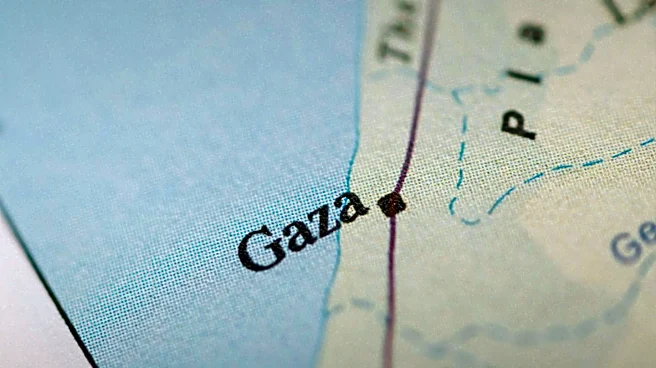
Israel's reduction in Gaza strikes and expressed disagreement with the Prime Minister's approach. He stated, "I think targeted assassinations should be carried out in Gaza, taking down 30 to 40 every night." Ben-Gvir further asserted that "there are people there who are not worthy of life. They shouldn’t live. They’re not even people." He also advocated for mass emigration into Gaza, viewing the strip as part of Israel, and suggested that for terrorists, there should be "no emigration, nothing, just to kill them one by one." Despite not having direct authority over the military to order strikes, Ben-Gvir's position within the security cabinet and his popularity among some segments of the Israeli population give his statements significant weight.
Why It's Important?
These statements from a high-ranking Israeli minister carry significant international implications, particularly for U.S. foreign policy and its role in the Israeli-Palestinian conflict. The call for widespread killings and the dehumanizing language used by Minister Ben-Gvir could exacerbate tensions in the region and draw strong condemnation from international bodies and human rights organizations. For the U.S., which often acts as a mediator and provides substantial aid to Israel, such rhetoric complicates diplomatic efforts to de-escalate the conflict and achieve a lasting peace. It could also fuel anti-Israel sentiment globally and put pressure on the U.S. administration to re-evaluate its relationship with the current Israeli government. The minister's views on Gaza as part of Israel and his encouragement of mass emigration also directly contradict international efforts towards a two-state solution and could lead to further instability and humanitarian crises in the region.
What's Next?
The international community is likely to react strongly to Minister Ben-Gvir's statements, potentially leading to increased diplomatic pressure on Israel. The U.S. government may face calls from within and outside to condemn the remarks and potentially reconsider its support for certain Israeli policies. It remains to be seen how Prime Minister Benjamin Netanyahu's government will address these controversial comments from one of its ministers, especially given Ben-Gvir's stated disagreement with the Prime Minister's approach to Gaza strikes. The statements could also influence public opinion and political discourse within Israel, potentially bolstering support for hardline policies or, conversely, sparking internal debate and opposition. The ongoing military offensive in Gaza and the humanitarian situation there will likely remain under intense scrutiny, with such rhetoric further complicating any prospects for a ceasefire or long-term resolution.
Beyond the Headlines
Minister Ben-Gvir's statements highlight a deeper ideological divide within Israeli politics and society regarding the Palestinian question. His popularity, particularly since the October 7 attacks, suggests a growing segment of the Israeli population may be receptive to more extreme views on national security and the treatment of Palestinians. This trend could have profound long-term implications for the future of the region, potentially leading to a further entrenchment of conflict and a diminished prospect for peaceful coexistence. The dehumanizing language used by a government official also raises serious ethical concerns about the conduct of warfare and the potential for human rights abuses. Such rhetoric can normalize violence and prejudice, making it more difficult to foster dialogue and understanding between Israelis and Palestinians. The international community's response will be crucial in shaping the narrative and potentially influencing the trajectory of the conflict.