





What's Happening?
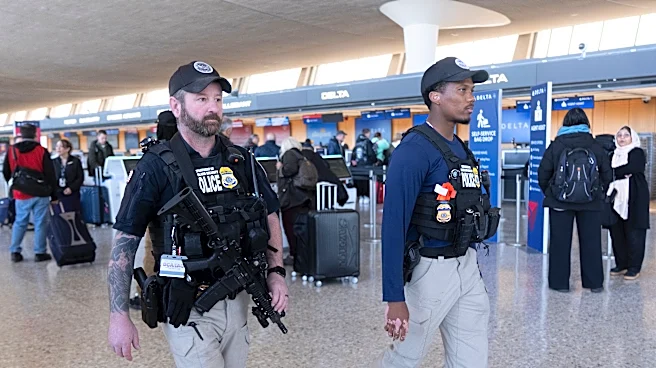
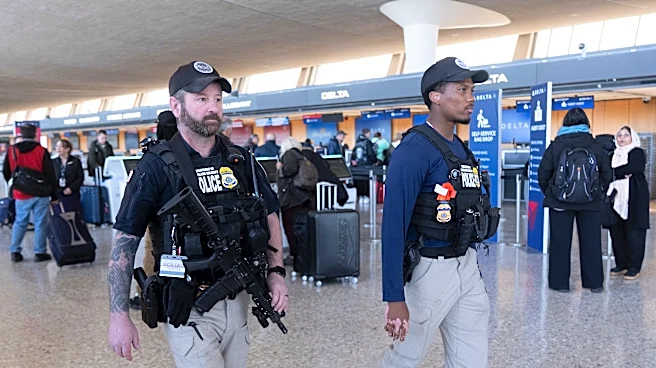
Homeland Security Secretary Markwayne Mullin has proposed withdrawing U.S. Customs and Border Protection (CBP) officers from airports in sanctuary cities, a move that has garnered support from some Republican lawmakers. The proposal aims to pressure cities and states
with sanctuary policies, which limit cooperation with federal immigration enforcement. Key supporters include Senators Lindsey Graham and Deb Fischer, who argue that sanctuary cities should face consequences for their policies. However, the proposal has faced criticism from Democrats and some industry experts who warn of potential disruptions to international travel and economic fallout. The plan, first introduced in April, would affect major airports in cities like New York, Los Angeles, and Chicago, potentially halting their ability to process international flights.
Why It's Important?
The proposal has significant implications for U.S. air travel and the economy. Removing CBP officers from major airports could disrupt international flights, affecting tourism, cargo, and supply chains. Industry groups have expressed concerns about the logistical challenges and economic impact, warning of cascading delays and rerouted flights. The plan also highlights the ongoing political debate over immigration policies and the role of sanctuary cities. While some Republicans support the measure as a means to enforce federal law, Democrats argue it could politicize critical infrastructure and harm the economy. The outcome of this proposal could set a precedent for how federal and local governments interact on immigration issues.
What's Next?
The proposal is still under consideration, with no confirmed timeline for implementation. As discussions continue, stakeholders from various sectors, including transportation and tourism, are likely to weigh in on the potential impacts. The Department of Homeland Security has yet to finalize the plan, and further political negotiations are expected. The response from affected cities and states, as well as potential legal challenges, could influence the proposal's future. Additionally, the economic implications may prompt further analysis and debate among lawmakers and industry leaders.