





What's Happening?
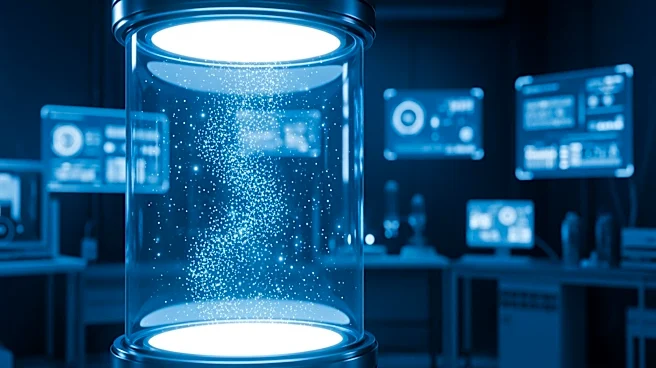
Researchers at the Lawrence Livermore National Laboratory (LLNL) conducted controlled experiments to simulate nuclear fallout using a high-temperature plasma tube. The study aimed to understand how particles vaporized in a nuclear fission reaction behave
when cooling. The experiment involved uranium, cesium, and cerium, with cesium showing unexpected behavior by condensing later and forming complex compounds. The research provides insights into nuclear fallout, helping scientists interpret nuclear debris and improve safety planning.
Why It's Important?
Understanding nuclear fallout is crucial for disaster management and safety planning. The findings from LLNL's experiments can enhance models used to interpret nuclear debris, supporting decision-making in nuclear events. This research is significant for national security, as it helps predict and mitigate the effects of nuclear incidents. Additionally, the study's insights could apply to other high-temperature environments, broadening its impact beyond nuclear safety.