



What's Happening?
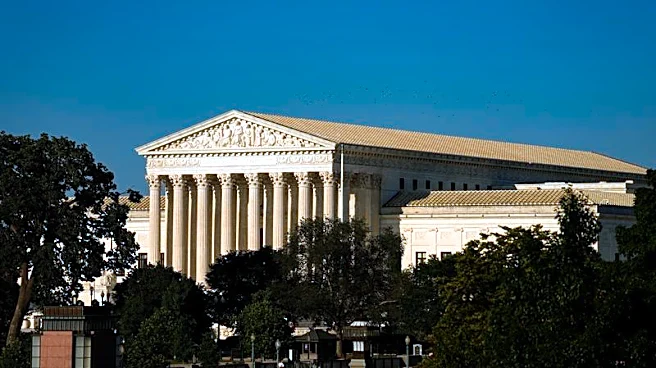
The U.S. Supreme Court has made a controversial decision regarding partisan gerrymandering, ruling that it is a legitimate government purpose. This decision, part of the Callais case, allows states to use partisan gerrymandering as a cover for creating
voting maps that may dilute the voting power of minority groups. The ruling has sparked criticism as it appears to contradict previous court stances that viewed partisan gerrymandering as undemocratic. The decision has significant implications for the Voting Rights Act, as it grants states a constitutional right to engage in partisan gerrymandering, potentially undermining efforts to combat racial discrimination in voting.
Why It's Important?
The Supreme Court's ruling on partisan gerrymandering could have far-reaching effects on the U.S. electoral system, potentially altering the balance of political power. By legitimizing partisan gerrymandering, the decision may encourage states to draw district maps that favor the ruling party, reducing electoral competitiveness and representation for minority groups. This could lead to increased political polarization and undermine public confidence in the democratic process. The ruling also highlights the need for legislative action to establish national standards for fair redistricting, as the current legal framework may not adequately protect against gerrymandering abuses.