







What's Happening?
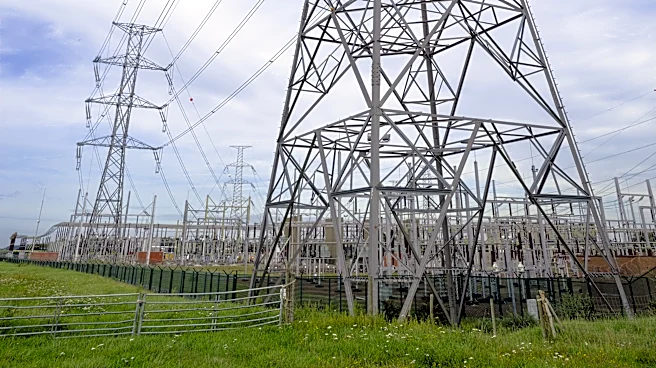
Cambodia has announced plans for the construction of a 120-kilometer, 230-kilovolt power transmission line aimed at connecting a large solar farm in Krakor district, Pursat province, to the national electricity grid. The project, implemented by Electricité
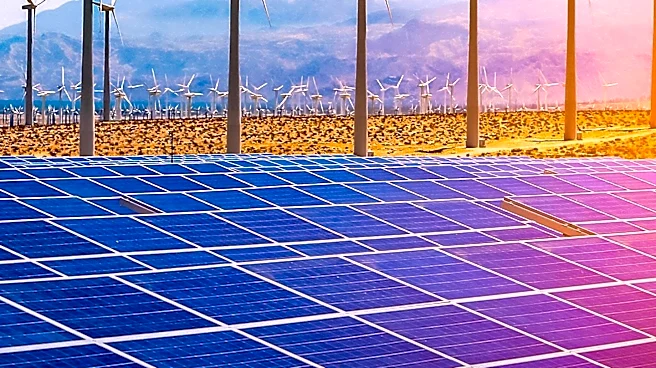
du Cambodge (EDC), includes building two new substations and expanding two existing ones to enhance the stability of the national grid. Minister of Mines and Energy Keo Rottanak stated that the initiative is backed by a $183 million loan from the Asian Development Bank (ADB). The primary goal is to distribute solar power generated from a development with over 1,100 megawatts of capacity across Kandal, Kampong Chhnang, and Pursat provinces, and eventually nationwide. This project is expected to help Cambodia achieve its target of generating at least 70% of its electricity from clean energy sources by 2030, up from the current 63%.
Why It's Important?
This infrastructure project is significant for Cambodia's energy future and economic development. By integrating a major solar power source into the national grid, the country aims to enhance energy security, reduce reliance on fossil fuels, and meet its ambitious clean energy targets. A more stable and expanded electricity network is crucial for supporting economic growth, attracting foreign and domestic investment, and improving the livelihoods of its citizens. The project is specifically designed to reduce power outages in key economic zones, industrial areas, agricultural regions, and residential communities. Furthermore, the expansion of electricity supply is projected to stimulate job creation, with an example cited in Kampong Tralach district where factory employment could double from 50,000 to over 100,000 workers, thereby reducing labor migration.
What's Next?
Construction of the 120-kilometer transmission line and associated substations will proceed, funded by the $183 million loan from the Asian Development Bank. The project will involve continued cooperation between Electricité du Cambodge, local authorities, and residents to facilitate its implementation. Upon completion, the solar power generated in Krakor district will be fed into the national grid, significantly increasing the proportion of clean energy in Cambodia's overall electricity mix. The government will monitor the project's impact on reducing power outages, supporting industrial growth, and creating employment opportunities in the connected provinces and beyond. This initiative will also serve as a critical step towards Cambodia achieving its 2030 clean energy goals and potentially attracting further investment in renewable energy infrastructure.
Beyond the Headlines
Beyond its immediate energy and economic benefits, this project signifies Cambodia's commitment to sustainable development and its role in regional green energy initiatives. The integration of large-scale solar power into the national grid reflects a broader global trend towards decarbonization and energy independence. This move could position Cambodia as a leader in renewable energy within the ASEAN region, potentially attracting further international partnerships and investments in green technologies. The focus on strengthening grid stability also addresses a common challenge in developing nations, where unreliable power supply can hinder economic progress. Ethically, the project contributes to global efforts to combat climate change, while socially, it aims to improve living standards and create local employment, fostering community development and reducing urban migration pressures.